
Orange Cream Cake – 7 Secrets for a Creamy Citrus Dream

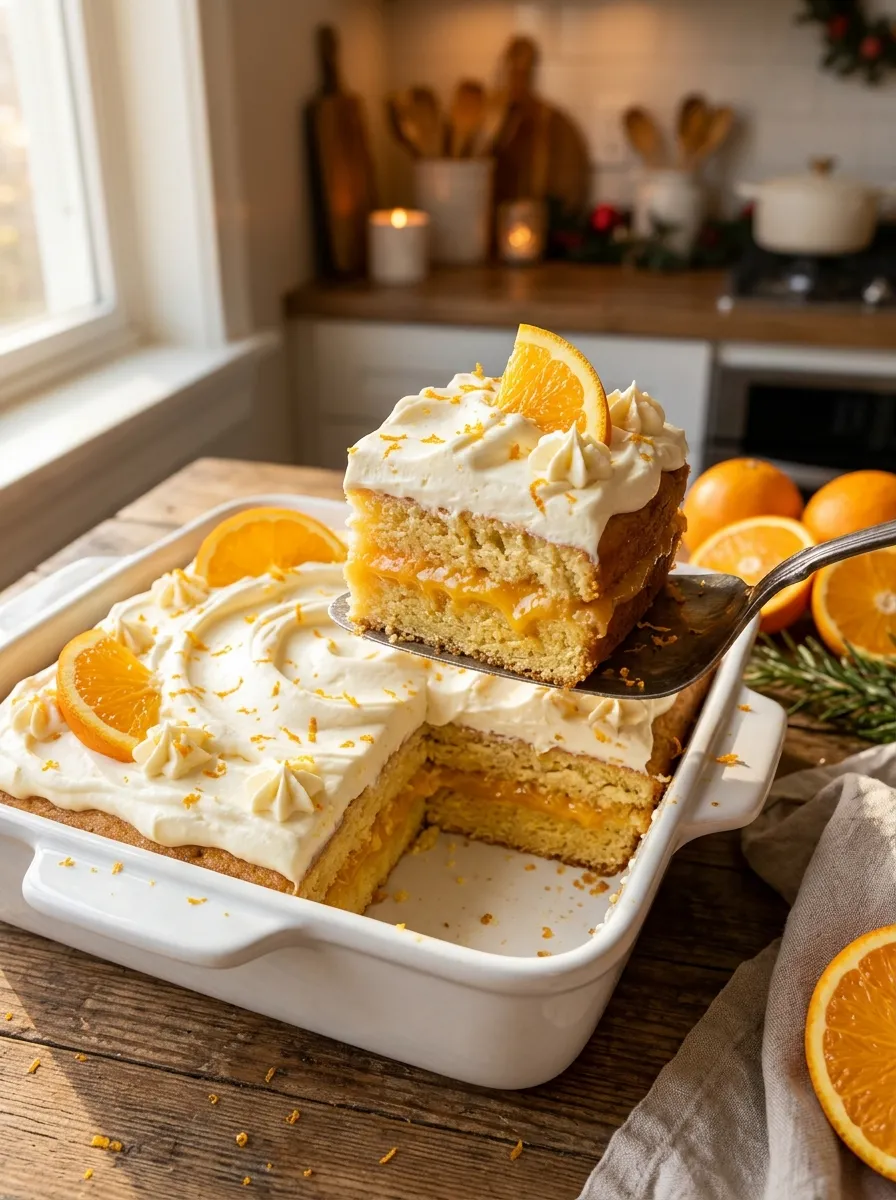
Orange cream cake is the kind of old-fashioned Southern dessert that makes a family dinner feel special. Imagine a buttery golden sponge scented with fresh orange zest, a thick glossy orange-lemon filling and a cloud of silky vanilla cream, all chilled until every slice cuts clean.
This Grandma’s Creamy Orange Citrus Dream Cake is bright, creamy and refreshing without being heavy. The sponge stays moist, the citrus filling tastes like concentrated orange curd and the cream is rich yet airy. It is the orange cream cake you will want to bake for Thanksgiving, Christmas and every Sunday dinner in between.
And the best part? It all comes together in a single 9-inch pan, and you can make it a day ahead. Jump straight to the recipe or keep reading for all my grandma-approved tips.
Grandma’s Creamy Orange Citrus Dream Cake
An irresistible Southern-style dessert with buttery golden sponge cake, thick silky vanilla cream and a luscious, glossy orange-lemon filling. Perfect for Thanksgiving, Christmas and old-fashioned family Sunday dinners.
Ingredients
Moist Golden Cake
Thick Orange-Lemon Filling
Silky Vanilla Cream
Decoration
Instructions
- Prepare the golden cakePreheat the oven to 350°F (175°C). Grease and line a 9-inch square baking pan. Whisk together the flour, baking powder and salt. In a separate bowl, beat the butter and sugar until light and fluffy. Add the eggs one at a time, followed by the vanilla and orange zest. Gradually alternate the dry ingredients with the milk and orange juice, mixing just until combined.
- Bake until golden and tenderPour the batter into the pan and smooth the top. Bake for 28–35 minutes, until golden and a toothpick inserted into the center comes out clean. Cool completely before assembling.
- Make the glossy orange-lemon fillingIn a saucepan, whisk together the orange juice, lemon juice, sugar, cornstarch and egg yolks until completely smooth. Cook over medium-low heat, stirring constantly, until the mixture thickens into a rich, glossy citrus custard and begins to bubble gently. Continue cooking for 1 minute, stirring continuously. Remove from the heat and stir in the butter and orange zest. Let the filling cool until thick and spreadable, stirring occasionally. It should look like a silky, concentrated orange curd rather than a thin sauce.
- Whip the vanilla creamBeat the softened cream cheese, powdered sugar and vanilla until smooth. In another bowl, whip the cold heavy cream to firm peaks. Gently fold the whipped cream into the cream cheese mixture until thick, silky and airy. Refrigerate until ready to assemble.
- Assemble the creamy citrus layersPlace the cooled cake on a serving tray or keep it in the baking pan. Spread about one-third of the vanilla cream across the orange cream cake. Spoon the cooled orange-lemon filling over the cream in a generous, even layer. Refrigerate for 20–30 minutes so the filling firms up. Gently spread the remaining vanilla cream over the citrus layer, keeping the layers distinct but naturally connected.
- Chill for the perfect creamy textureRefrigerate the assembled cake for at least 3 hours, preferably 4–5 hours. The citrus filling should become thick, glossy and gently yielding while the cream stays rich and stable.
- Decorate and serveCut into 12 generous squares with a sharp knife wiped clean between cuts. Garnish each serving with fresh orange wedges, small cream swirls and a little orange zest. Serve chilled for clean, luscious layers.
Grandma’s Secrets for Extra Creaminess
- Extra-moist sponge: brush the cooled cake with 2–3 tablespoons of fresh orange juice before adding the cream.
- Perfectly glossy filling: cook the citrus mixture until thick enough to hold its shape on a spoon.
- Luxurious cream: use full-fat cream cheese and cold heavy whipping cream.
- Beautiful slicing: chill thoroughly before cutting, then let each portion stand for 5–10 minutes before serving.
- Natural creamy flow: the citrus filling should soften gently at serving temperature, never run like juice.
Storage
Keep covered in the refrigerator for up to 3 days. Because the cake contains cream cheese, whipped cream and an egg-based citrus filling, do not leave it at room temperature for more than 2 hours.
Holiday serving idea: Prepare the orange cream cake the day before your holiday gathering. Garnish with fresh orange wedges just before serving for a bright, beautiful dessert centerpiece.
Nutrition per square
Estimated values for 1 of 12 squares, calculated from standard ingredient data. Brands and portion size will change the numbers. Total time includes cooling the cake and filling.
What Makes This Orange Cream Cake Special?
Plenty of citrus cakes rely on a thin glaze or a splash of juice. This orange cream cake builds real layers of flavor and texture, so every bite tastes like oranges and cream.
A Golden, Orange-Scented Sponge
Fresh orange zest and juice go straight into the batter, so the sponge itself tastes of oranges. Alternating the flour with the milk and juice keeps the crumb tender, and a quick brush of orange juice after baking makes it even more moist.
A Thick, Glossy Orange-Lemon Filling
The filling is a cooked citrus custard thickened with cornstarch and egg yolks. A little lemon juice keeps the orange flavor bright and balanced. When it cools it becomes a spreadable, orange-curd-like layer that never runs. If you love fruity layers, you will also like my Strawberry White Chocolate Cake.
Silky Vanilla Cream
Cream cheese, powdered sugar and vanilla form the base, and whipped cream folded in makes it light and airy. The slight tang balances the sweetness of the orange cream cake. For more creamy favorites, try my Coconut Dream Cake or the Mango Coconut Cream Cake.
Ingredients for Orange Cream Cake
Everything for this orange cream cake is simple. The full measurements are in the recipe card above, and here is what each group does.

For the Moist Golden Cake
- 1½ cups all-purpose flour
- 1½ teaspoons baking powder
- ¼ teaspoon salt
- ½ cup unsalted butter, softened
- ¾ cup granulated sugar
- 2 large eggs
- ½ cup whole milk
- ¼ cup fresh orange juice
- 1 tablespoon orange zest
- 1 teaspoon vanilla extract
For the Thick Orange-Lemon Filling
- 1½ cups fresh orange juice
- ¼ cup fresh lemon juice
- ¾ cup granulated sugar
- ¼ cup cornstarch
- 2 large egg yolks
- 2 tablespoons unsalted butter
- 1 tablespoon finely grated orange zest
- 1–2 drops orange food coloring (optional)
For the Silky Vanilla Cream
- 8 oz cream cheese, softened
- ¾ cup powdered sugar
- 1 teaspoon vanilla extract
- 1½ cups cold heavy whipping cream
For the Decoration
- Fresh orange wedges
- Finely grated orange zest
- Small swirls of whipped cream
Why Fresh Orange Juice and Zest Matter
Zest holds the aromatic oils of the fruit, while juice brings sweetness and acidity. Using both in the sponge and the filling gives the orange cream cake a layered, natural citrus flavor. You can read more about the fruit itself on Wikipedia’s orange page.
Why Cornstarch and Egg Yolks?
Cornstarch thickens the juice into a spreadable filling, and the egg yolks add richness and a silky, custard-like texture. Together they give the filling its glossy shine, similar to a classic fruit curd.
Why Cream Cheese and Whipped Cream?
Cream cheese brings body and a gentle tang. Whipped cream makes the topping light and airy. The combination is stable enough to spread and slice, yet soft on the fork.
How to Make Orange Cream Cake
Follow these seven steps for a bakery-style orange cream cake. Plan for about four and a half hours in total, most of it hands-off chilling.
Step 1: Prepare the golden cake
Preheat the oven to 350°F (175°C), then grease and line a 9-inch square baking pan. Whisk the flour, baking powder and salt together. In a separate bowl, beat the butter and sugar until light and fluffy, then add the eggs one at a time, followed by the vanilla and orange zest. Alternate the dry ingredients with the milk and orange juice, mixing just until combined.
Step 2: Bake until golden and tender
Pour the batter into the pan and smooth the top. Bake for 28–35 minutes, until golden and a toothpick inserted into the center comes out clean. Cool completely before assembling, or the cream will melt into the sponge.
Step 3: Make the glossy orange-lemon filling
Whisk the orange juice, lemon juice, sugar, cornstarch and egg yolks in a saucepan until completely smooth. Cook over medium-low heat, stirring constantly, until the mixture thickens into a rich, glossy citrus custard and begins to bubble gently. Keep cooking for 1 minute while stirring, then remove from the heat and stir in the butter and orange zest. Cool until thick and spreadable, stirring now and then. It should look like silky, concentrated orange curd, not a thin sauce.

Step 4: Whip the vanilla cream
Beat the softened cream cheese, powdered sugar and vanilla until smooth. In another bowl, whip the cold heavy cream to firm peaks. Fold the whipped cream gently into the cream cheese mixture until thick, silky and airy, then refrigerate until you are ready to assemble.
Step 5: Assemble the creamy citrus layers
Place the cooled cake on a serving tray or leave it in the pan. Spread about one-third of the vanilla cream over the cake, then spoon the cooled orange-lemon filling over it in an even, generous layer. Refrigerate for 20–30 minutes so the filling firms up, then spread the remaining cream on top, keeping the layers distinct but naturally connected.
Step 6: Chill for the perfect creamy texture
Refrigerate the assembled cake for at least 3 hours, preferably 4–5 hours. The citrus filling turns thick, glossy and gently yielding while the cream stays rich and stable.
Step 7: Decorate and serve
Cut into 12 generous squares with a sharp knife wiped clean between cuts. Garnish each serving with fresh orange wedges, small cream swirls and a little orange zest, and serve chilled for clean, luscious layers.
Seven Secrets to the Creamiest Orange Cream Cake
These are the small details that make the difference between a good orange cream cake and one everybody asks you to bring again.
Secret 1: Brush the sponge with orange juice
Brushing 2–3 tablespoons of fresh orange juice over the cooled sponge before adding the cream gives you an extra-moist orange cream cake with a deeper citrus flavor in every bite.
Secret 2: Cook the filling until it holds its shape
The citrus mixture is ready when it is thick enough to hold its shape on a spoon. That is what keeps the filling glossy and spreadable instead of runny.
Secret 3: Use full-fat cream cheese and cold cream
Low-fat cream cheese can turn watery, and warm cream will not whip to firm peaks. Full-fat cream cheese and cold heavy whipping cream give the luxurious, stable cream that this orange cream cake needs.
Secret 4: Stir constantly and keep the heat gentle
Medium-low heat and constant stirring prevent lumps and scrambled yolks, so the filling stays silky and smooth.
Secret 5: Cool the filling completely
A warm filling slides into the cream and ruins the layers. Cool it until thick, stirring occasionally, before you spoon it over the orange cream cake.
Secret 6: Give it a short chill between layers
Twenty to thirty minutes in the refrigerator after adding the filling firms it up, so the top layer of cream spreads cleanly.
Secret 7: Chill thoroughly, then rest each slice
Chill the cake for at least 3 hours before cutting, then let each portion stand 5–10 minutes before serving. The filling should soften gently at serving temperature, never run like juice.
How to Get a Perfect Orange-Lemon Filling
- Whisk before heating: mix the cornstarch with the cold juice first so it dissolves without lumps.
- Keep stirring: use a whisk and scrape the corners of the pan so nothing catches on the bottom.
- Watch for the first bubble: the filling thickens as it begins to bubble gently, then cook one more minute to fully activate the cornstarch.
- Strain if needed: if you see any tiny lumps, press the hot filling through a fine sieve before cooling.
- Cover the surface: press plastic wrap onto the filling while it cools to prevent a skin from forming.
Looking for another showstopper with a creamy finish? Try my Oreo Mousse Cake or the 15-Minute White Chocolate Coconut Mousse Cake.
Variations and Substitutions
- Lemon orange cake: add the zest of half a lemon to the sponge for a sharper citrus note.
- Blood orange version: swap the juice in the filling for blood orange juice for a deeper color and flavor.
- Mascarpone cream: replace the cream cheese with mascarpone for a softer, milder cream.
- Mini orange cream cakes: cut the chilled cake into small squares and serve in cupcake liners for parties.
- Extra orange kick: add 1 teaspoon of orange zest to the vanilla cream.
- Without food coloring: leave it out; the filling will simply be a softer golden-orange.
Serving Ideas for Thanksgiving, Christmas and Sunday Dinner
This orange cream cake looks as bright as it tastes, so it suits plenty of occasions.
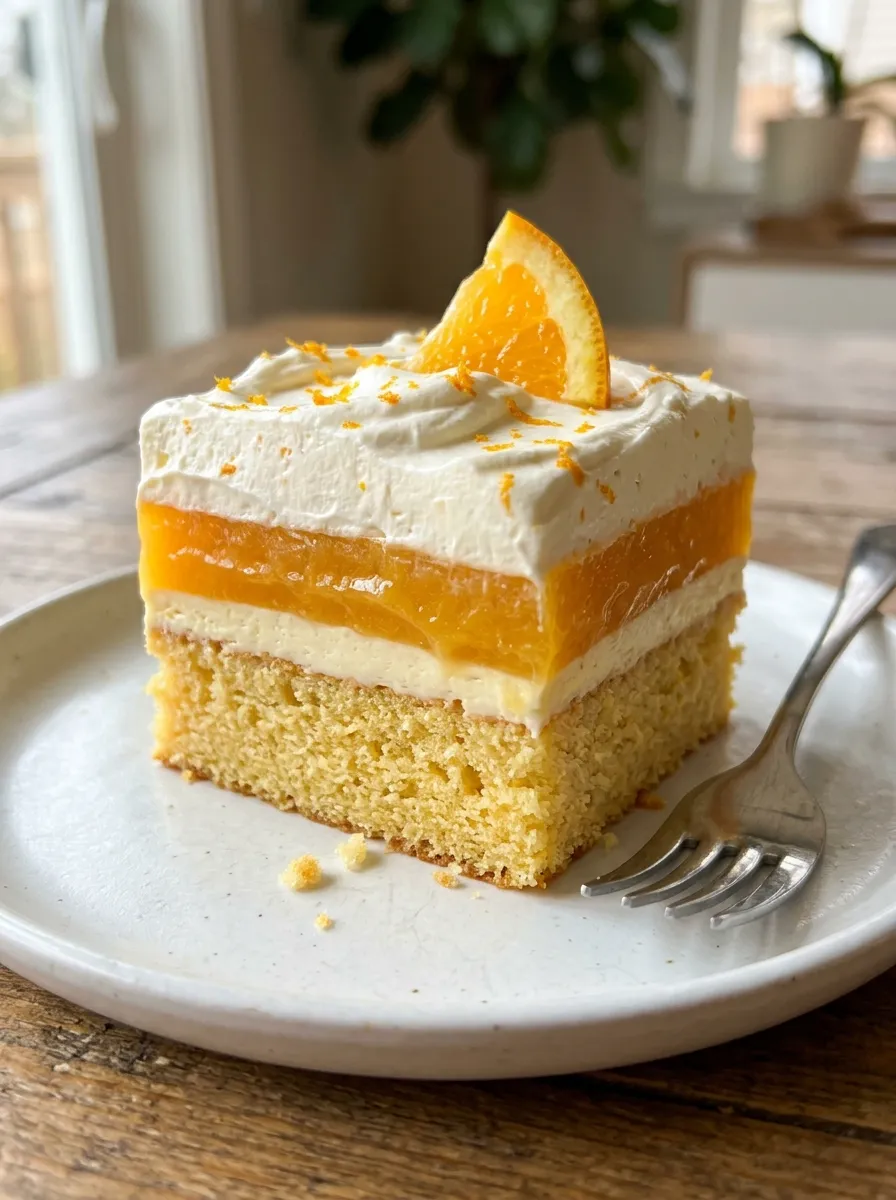
- Thanksgiving table: a light, citrusy finish after a rich meal.
- Christmas dessert: bright oranges look beautiful with pine branches and candlelight.
- Sunday dinner: a simple make-ahead dessert that feels special.
- Baby showers and brunch: serve chilled squares with tea or coffee.
- Afternoon treat: pair a small square with a cup of hot tea.

Planning your holiday menu? Browse more Christmas recipes, Thanksgiving recipes and all our cake recipes.
Storage and Make-Ahead Tips
Refrigerator Storage
Keep the orange cream cake covered in the refrigerator for up to 3 days. Because it contains cream cheese, whipped cream and an egg-based filling, do not leave it at room temperature for more than 2 hours. See the FoodSafety.gov guidelines for safe handling of perishable foods.
Freezing the Sponge
The assembled cake does not freeze well, but you can bake the sponge ahead. Cool it completely, wrap it tightly and freeze it for up to 2 months. Thaw it in the refrigerator, then assemble with fresh filling and cream.
Make-Ahead Plan
- Two days before: bake the sponge, cool it and wrap it well.
- One day before: make the filling and cream, assemble the orange cream cake and chill.
- Serving day: cut into squares and garnish with fresh orange wedges and zest.
Prepare the cake the day before your holiday gathering. Garnish with fresh orange wedges just before serving for a bright, beautiful dessert centerpiece.
Common Orange Cream Cake Mistakes and Solutions
Why is my sponge dry?
Overbaking or too much flour is the usual cause. Measure the flour by spooning it into the cup and leveling it, and start testing at 28 minutes.
Why is my orange cream cake runny?
The filling was not cooked until thick or not cooled enough. Cook it until it holds its shape on a spoon and cool it completely before assembling.
Why did the cream turn soft?
The cream cheese was too warm or the cream was not cold enough. Chill the bowl and whip the heavy cream to firm peaks before folding.
Why is my filling lumpy?
The heat was too high or it was not stirred constantly. Cook over medium-low heat, whisk the whole time and strain if needed.
Why are my slices messy?
The orange cream cake was not chilled long enough. Chill for at least 3 hours and wipe the knife clean between cuts.
Why does my orange cream cake taste bland?
Use fresh juice, plenty of zest and a little lemon juice. Zest is where most of the orange flavor lives.
Frequently Asked Questions
Can I make orange cream cake the day before?
Yes, and it is actually better that way. The cake needs at least 3 hours in the refrigerator, and an overnight chill gives the cleanest layers and the best flavor. Add the fresh orange wedges just before serving.
Can I use bottled orange juice?
Fresh juice gives a much brighter flavor and a better orange zest pairing, so it is strongly recommended. If you must use bottled juice, choose 100% juice that is not from concentrate and taste the filling for sweetness.
Why is my orange-lemon filling runny?
It was probably not cooked long enough or not cooled enough. The mixture must bubble gently and cook for a full minute while you stir, then cool until thick. It should hold its shape on a spoon.
Can I freeze orange cream cake?
The assembled cake is not recommended for freezing because the cream and the egg-based filling can change texture. You can bake the sponge ahead, wrap it tightly and freeze it for up to 2 months, then thaw and assemble with fresh filling and cream.
Can I use mascarpone instead of cream cheese?
Yes, mascarpone gives a softer, sweeter and milder cream. Use the same weight and keep it cold before folding in the whipped cream.
Can I bake it in a 9×13-inch pan?
You can, but the sponge will be thinner and will bake faster, so start checking around 20–25 minutes. You may also want to make a little extra filling and cream for good coverage.
What can I do with the leftover egg whites?
Use them for meringues, omelets or a simple egg white scramble. They keep for a few days in the refrigerator or can be frozen in a sealed container.
Is the orange food coloring necessary?
No, it is optional. The filling will have a natural pale golden-orange color without it, and one or two drops simply make it more vibrant.
Can I use blood oranges or tangerines?
Yes, for a different twist. Blood orange juice gives a deeper, slightly berry-like flavor and a rosy color, while tangerine juice is sweeter. Keep the lemon juice so the filling stays balanced.
How far ahead can I make this for Thanksgiving or Christmas?
Make it the day before your gathering and keep it chilled. It holds beautifully for up to 3 days in the refrigerator, but fresh wedges and zest should go on just before serving.
Final Thoughts: A Citrus Cake Worth Sharing
This Grandma’s Creamy Orange Citrus Dream Cake brings everything people love about a Southern dessert: a tender sponge, thick silky cream and a filling that tastes like sunshine. It is simple to make, easy to slice and perfect to prepare a day ahead, so you can enjoy your own party.
If you try this orange cream cake, leave a comment and tell me how it turned out. Explore more ideas in Southern Bites or on the All Recipes page, and do not miss my Caramel Pecan Carrot Cake and Peach Cobbler Pound Cake.
Want more holiday baking? Download my free Southern desserts cookbook for classic recipes delivered to your inbox.
Recipes I Think You’ll Love