

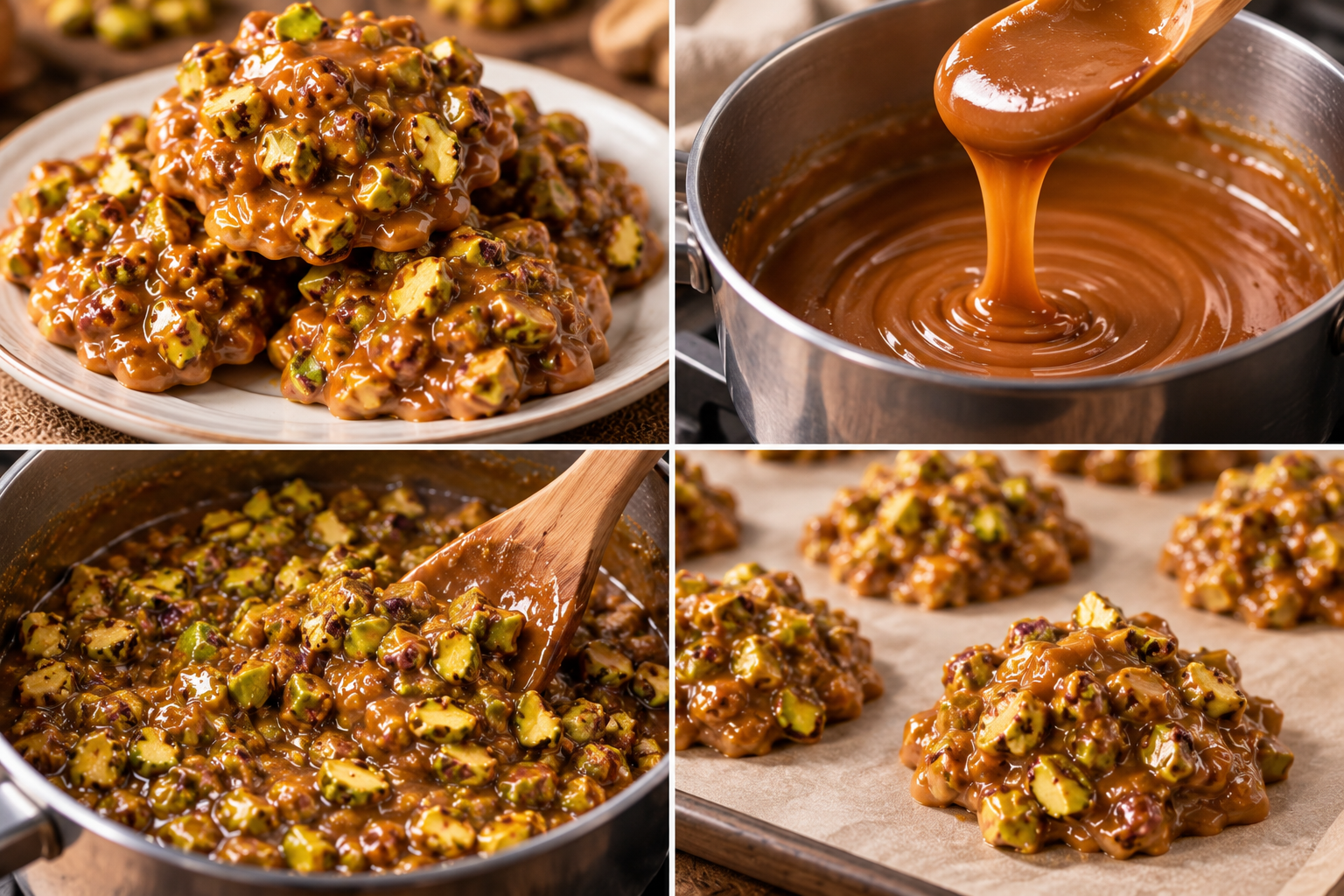
Gooey Brown Sugar Pistachio Pralines combine rich, creamy brown sugar caramel with crunchy, roughly chopped pistachios to create an unforgettable homemade Southern-inspired candy. Every bite delivers a wonderful contrast between tender caramel, buttery sweetness, and the delicate nuttiness of vibrant green pistachios.
Picture a warm saucepan filled with golden-brown caramel. A wooden spoon moves slowly through the mixture, creating beautiful glossy swirls. Then, a generous handful of chopped pistachios tumbles into the caramel. After a few gentle folds, the mixture becomes thick, chunky, and wonderfully tempting.
Finally, generous spoonfuls land on parchment paper and cool into rustic candy clusters.
That is the magic of this homemade pistachio praline recipe.
Inspired by the comforting traditions of Southern candy making, this variation replaces classic pecans with flavorful pistachios. The result looks especially beautiful thanks to the contrast between golden caramel and naturally green nuts.
These pralines are perfect for holiday dessert trays, homemade gifts, family gatherings, or an afternoon treat with coffee.
Best of all, the ingredient list is surprisingly short. You need only brown sugar, heavy cream, shelled pistachios, and a few optional flavorings.
However, simple ingredients do not mean that temperature and technique are unimportant. Pralines are cooked sugar candies, so careful attention during preparation makes a remarkable difference.
In this guide, you will discover how to make creamy homemade pralines, avoid common caramel mistakes, control the texture, and achieve beautiful bakery-style results.
Table of Contents
Why You’ll Love These Gooey Brown Sugar Pistachio Pralines
There is something special about a homemade candy that feels both familiar and luxurious.
These gooey brown sugar pistachio pralines offer that perfect combination.
Unlike ordinary chocolate-covered nuts, pralines develop their character through cooking sugar and cream together. As the mixture reaches the correct temperature, it becomes concentrated enough to form soft candy when cooled and properly beaten.
The pistachios contribute a satisfying crunch without overwhelming the creamy caramel base.
Here are several reasons this recipe deserves a place in your dessert collection.
1. Rich Brown Sugar Flavor
Brown sugar provides the deep, warm sweetness that defines this candy.
Its molasses notes create a richer flavor than plain white sugar alone.
As it combines with heavy cream, the mixture develops a beautiful caramel-like taste and golden-brown appearance.
2. Creamy, Tender Candy Texture
These pralines are designed to be tender rather than hard like brittle.
When prepared correctly, the candy holds its shape while offering a slightly soft, creamy bite.
That delicate balance makes them especially enjoyable.
3. Plenty of Crunchy Pistachios
Roughly chopped pistachios provide texture throughout each cluster.
Their natural green color also makes every piece visually distinctive.
Some nuts remain nearly whole, while others break into smaller pieces, creating a pleasant variety in every bite.
4. A Short Ingredient List
You do not need dozens of ingredients to create a memorable homemade dessert.
Brown sugar, heavy cream, and pistachios do most of the work.
Vanilla and salt round out the flavor beautifully.
5. Beautiful Homemade Gifts
These pralines look wonderful arranged in parchment-lined candy boxes.
Their irregular shapes add old-fashioned charm, while the glossy caramel and green pistachios give them an elegant appearance.
6. Wonderful for Seasonal Celebrations
The warm caramel flavor feels particularly inviting during fall and winter.
Nevertheless, these treats are delicious throughout the year.
Serve them for Thanksgiving, Christmas gatherings, birthdays, afternoon tea, or weekend family visits.
7. Easy to Customize
You can adjust the texture by controlling how finely the pistachios are chopped.
You can also use a lighter or darker brown sugar for a slightly different caramel flavor.
The basic preparation method remains the same.
What Are Brown Sugar Pistachio Pralines?
Pralines are a family of nut-based confections with several regional variations.
Traditional Southern pralines are closely associated with Louisiana and New Orleans. They commonly feature pecans combined with cooked sugar and dairy ingredients.
French-style pralines may refer to caramelized nuts or nut pastes, depending on the preparation.
Our Gooey Brown Sugar Pistachio Pralines are a Southern-inspired adaptation.
Instead of using pecans, this version uses roughly chopped pistachios. The candy mixture consists of brown sugar and heavy cream, cooked to the soft-ball stage before the nuts are incorporated.
This method creates thick, spoonable candy that can be portioned onto parchment paper.
After cooling, the clusters should retain their rustic shape.
They are not intended to behave exactly like caramel sauce, nor should they become as hard as peanut brittle.
A successful batch balances a creamy interior with a firm enough exterior for handling.
Southern Pralines vs. Pistachio Pralines
| Feature | Classic Southern Pralines | This Pistachio Variation |
|---|---|---|
| Main nut | Pecans | Pistachios |
| Sweetener | Sugar, often including brown sugar | Brown sugar |
| Dairy | Cream or another milk-based ingredient | Heavy cream |
| Flavor | Buttery and nutty | Caramel-like and delicately nutty |
| Appearance | Golden-brown nut clusters | Glossy brown clusters with green pistachios |
| Texture | Creamy, sometimes crumbly | Creamy, tender, and slightly chewy |
| Preparation | Cook, beat, and spoon | Cook, beat, and spoon |
The central candy-making principle remains the same: cook the sugar mixture to the right stage and beat it sufficiently to form a stable confection.
Gooey Brown Sugar Pistachio Pralines Ingredients
The best homemade candy begins with ingredients that work together.
Each component contributes to flavor, texture, or structure.
For this recipe, we are keeping the ingredient list faithful to the original preparation and storyboard.
Complete Ingredient List
| Ingredient | Quantity | Purpose |
|---|---|---|
| Packed brown sugar | 2 cups | Deep caramel flavor and candy structure |
| Heavy cream | ¾ cup | Creaminess, richness, and moisture |
| Shelled pistachios, roughly chopped | 2 cups | Crunch, flavor, and visual texture |
| Vanilla extract | 1 teaspoon, optional | Sweet aroma |
| Salt | Small pinch, optional | Balances sweetness |
Yield: Approximately 12–15 medium-to-large pralines.
Preparation time: Approximately 5 minutes.
Cooking time: Approximately 15 minutes, depending on saucepan size and heat.
Cooling and setting: Approximately 20–30 minutes, potentially longer in a warm kitchen.
Total estimated time: Approximately 40–50 minutes.
These times are planning estimates. The candy thermometer, not the clock, determines when the syrup has finished cooking.
Choosing the Best Brown Sugar
Brown sugar is the foundation of the recipe.
Light brown sugar creates a gentler flavor, allowing the pistachios to remain especially noticeable.
Dark brown sugar offers more pronounced molasses notes and a deeper color.
Both can work, but their flavor profiles differ.
For a balanced result, light brown sugar is an excellent starting choice.
If you prefer deeper, more robust sweetness, consider using dark brown sugar.
When measuring, press the sugar firmly into the measuring cup.
Two cups of loosely measured brown sugar may contain less sugar than the recipe requires, which can alter the candy’s behavior.
Why Heavy Cream Matters
Heavy cream contributes fat, moisture, and richness.
It helps create the creamy quality associated with the finished pralines.
Its fat content also influences how the cooked sugar mixture behaves.
Do not automatically replace heavy cream with skim milk.
A lower-fat substitution changes the composition and may affect texture, setting, and flavor.
For the most dependable results, use standard heavy whipping cream.
Selecting Quality Pistachios
Pistachios make this variation especially distinctive.
Choose fresh, shelled pistachios with a pleasant nutty aroma.
Unsalted pistachios provide the greatest control over the final flavor.
Lightly roasted pistachios are also suitable and may produce a deeper nutty taste.
If using salted pistachios, omit the optional pinch of salt and taste carefully before making additional adjustments.
Most importantly, use roughly chopped pistachios rather than finely ground nuts.
Tiny particles disappear into the candy mixture and reduce the visual contrast.
Larger pieces remain visible, producing the chunky appearance shown in the preparation images.
How Finely Should You Chop Pistachios?
Aim for a combination of halves and coarse pieces.
A good visual target is approximately pea-sized pieces, although some may be larger.
Avoid reducing the entire batch to powder.
You want the nuts to remain recognizable after caramel coating.
This creates beautiful golden-brown clusters dotted with vivid green.
Optional Vanilla and Salt
Vanilla adds a familiar bakery aroma.
Because vanilla is a delicate flavoring, adding it after removing the saucepan from the heat helps preserve its character.
A small pinch of salt balances the sweetness.
Neither ingredient should dominate.
The primary flavors must remain brown sugar caramel and pistachios.
Equipment You’ll Need
Candy making is easier when everything is prepared before the saucepan goes onto the stove.
Once the syrup reaches the proper temperature, the remaining steps happen quickly.
Having the tools nearby prevents unnecessary delays.
| Equipment | Why It Matters |
|---|---|
| Heavy-bottomed saucepan | Promotes more even heating |
| Candy thermometer | Measures the soft-ball stage accurately |
| Wooden spoon or heatproof spatula | Helps dissolve sugar and incorporate pistachios |
| Measuring cups | Ensures consistent ingredient quantities |
| Mixing bowl | Holds prepared pistachios |
| Baking sheet | Supports the formed pralines |
| Parchment paper | Prevents sticking |
| Large tablespoon or cookie scoop | Creates consistent candy portions |
Choose a saucepan large enough to accommodate bubbling syrup.
Hot sugar mixtures can foam and rise while cooking.
A deep, heavy-bottomed pot is safer and more practical than a shallow pan.
Safety note: Boiling sugar syrup can cause serious burns. Avoid touching or tasting the mixture until it has cooled sufficiently.
How to Make Gooey Brown Sugar Pistachio Pralines Step by Step
These instructions follow the same preparation sequence shown in the 12-panel storyboard.
The process begins with sugar and cream, continues through careful caramel cooking and pistachio mixing, and ends with scooping and cooling.
Step 1: Prepare Your Baking Sheet
Line a large baking sheet with parchment paper.
Place it on a stable, heat-resistant surface.
Prepare enough room for 12–15 individual praline clusters.
Each mound needs a little space because the warm mixture may spread slightly.
Set out your spoon or cookie scoop.
Measure the pistachios and keep them nearby.
Once the cooked mixture starts thickening, you will want to work efficiently.
Step 2: Add Brown Sugar to the Saucepan
Place a heavy-bottomed saucepan over medium-low to medium heat.
Add 2 cups of packed brown sugar.
The storyboard shows the sugar falling into the dark saucepan in a steady cascade.
This step is visually simple but essential.
Using the measured quantity ensures that the ratio between sugar and cream stays consistent.
Avoid increasing the heat aggressively.
Sugar can scorch when exposed to excessive heat, especially in a thin-bottomed pan.
Step 3: Pour in the Heavy Cream
Add ¾ cup heavy cream directly over the brown sugar.
The white cream creates beautiful swirls as it meets the brown sugar.
Begin stirring gently with a wooden spoon.
The ingredients will initially appear uneven and grainy.
That is normal.
Continue stirring as the sugar dissolves into the cream.
The mixture gradually becomes smoother and darker.
Step 4: Stir Until Smooth
Maintain moderate heat.
Move the wooden spoon around the bottom and sides of the saucepan.
The goal is to dissolve the sugar fully before the mixture reaches a vigorous boil.
At first, you may notice pale streaks of cream.
Then, the mixture becomes a more uniform golden-brown liquid.
As it warms, it develops a silky appearance.
This stage is especially important for the final texture.
Undissolved sugar crystals can contribute to an excessively grainy result.
However, stirring indefinitely after the syrup starts boiling is not necessary.
Once the sugar has dissolved, reduce unnecessary agitation and monitor the syrup carefully.
Step 5: Cook to the Soft-Ball Stage
Bring the mixture to a gentle, steady boil.
Attach a candy thermometer so that its tip sits in the syrup without touching the bottom of the saucepan.
Cook until the temperature reaches 235–240°F (113–116°C).
This temperature range is known as the soft-ball stage.
At this point, the sugar concentration is suitable for making tender candies such as pralines and fudge.
The Exploratorium identifies this range as the soft-ball stage used for pralines and similar confections.
Do not judge readiness exclusively by appearance.
A thick, glossy mixture can still contain too much moisture.
Likewise, excessive cooking can push the candy toward a firmer, less creamy texture.
What Should the Caramel Look Like?
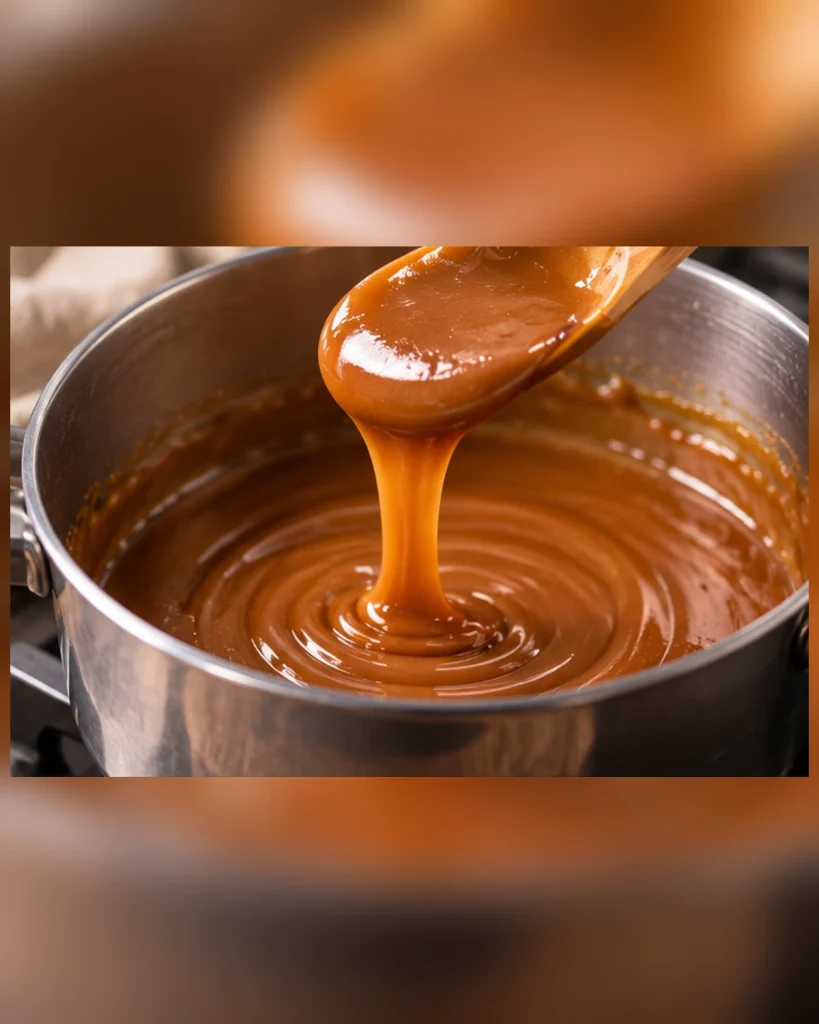
As the mixture cooks, its bubbles become more concentrated.
Its surface develops a warm golden-brown sheen.
When a wooden spoon rises from the pan, the syrup may flow back in a thicker ribbon.
This is the beautiful visual moment highlighted in the storyboard.
Still, the thermometer remains the most dependable guide.
Once the syrup reaches the target temperature, remove the saucepan from the heat promptly.
Step 6: Add the Chopped Pistachios
With the saucepan safely off the heat, add the 2 cups of roughly chopped pistachios.
If using vanilla and salt, add them now.
A bowl of pistachios falling into the thick caramel creates one of the recipe’s most attractive moments.
The green nuts stand out against the golden-brown mixture.
Use the wooden spoon to fold them gently into the syrup.
Make sure the nuts are distributed evenly.
The goal is to coat every pistachio piece with caramel without crushing the nuts.
Step 7: Beat Until Slightly Thickened
Continue stirring or beating the mixture briefly.
As it cools and is agitated, the cooked sugar mixture begins forming fine crystals.
This controlled crystallization gives traditional pralines their distinctive creamy candy texture.
The mixture should gradually become thicker and less fluid.
Watch for the point when it begins holding soft mounds instead of immediately flowing flat.
It may also lose a little of its glassy shine.
Stop before it becomes stiff, dry, or crumbly.
Beating too long may cause the candy to seize inside the saucepan.
Beating too little may leave the clusters excessively soft.
The correct stopping point is thick but still spoonable.
Step 8: Scoop Generous Portions
Using a tablespoon or cookie scoop, lift a generous mound of pistachio caramel.
Transfer it onto the prepared parchment paper.
Allow the mixture to slide naturally from the spoon.
Each portion should form a rustic, rounded cluster.
Repeat with the remaining mixture.
Work steadily because praline candy can thicken quickly as it cools.
Do not deliberately pour large amounts of loose caramel around the clusters.
The finished candy should retain recognizable individual shapes.
Step 9: Let the Pralines Set
Leave the clusters undisturbed at room temperature.
They usually begin firming as the cooked sugar cools and crystallizes.
Allow approximately 20–30 minutes initially.
Some batches may require additional time, depending on kitchen temperature, humidity, and candy consistency.
Properly set pralines should lift from the parchment while holding their shape.
They should not flow like a sauce.
The inside may remain tender and creamy.
Step 10: Serve and Enjoy
Once cooled, arrange the pralines on a plate or in a decorative candy box.
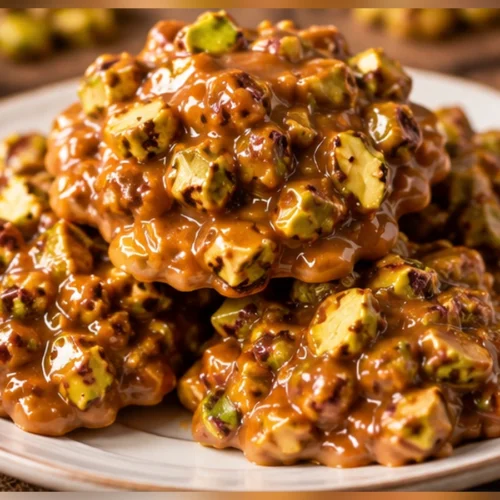
Their golden-brown surfaces should display generous pieces of green pistachio.
The shapes do not need to be perfectly identical.
In fact, those small irregularities add homemade charm.
Enjoy one with coffee, black tea, or a cold glass of milk.
These candies are especially satisfying when served in modest portions because their flavor is wonderfully rich.
The 7 Secrets to Perfect Gooey Brown Sugar Pistachio Pralines
The basic recipe is short, yet a few techniques make the difference between ordinary candy and a memorable homemade treat.
Secret 1: Measure Brown Sugar Carefully
Accurate measuring protects the sugar-to-cream balance.
Pack brown sugar firmly into the measuring cup.
Do not substitute an approximate quantity simply because the mixture looks thick enough.
Sugar concentration controls much of the setting process.
Even a noticeable change in proportions can affect the final texture.
Secret 2: Use a Heavy-Bottomed Saucepan
A sturdy saucepan distributes heat more evenly.
This lowers the risk of localized scorching.
It also makes the syrup easier to control as it approaches the target temperature.
A thin saucepan can produce hot spots, especially over a powerful burner.
For candy making, reliable heat control is worth the effort.
Secret 3: Respect the Soft-Ball Temperature
The most important technical detail is the cooking temperature.
Aim for 235–240°F.
For your first batch, consider targeting the middle of the range, approximately 237–238°F, with an accurately calibrated thermometer.
Cooking to this temperature does not guarantee a perfect batch by itself, because cooling and beating also influence crystallization.
Nevertheless, it provides a strong foundation.
Secret 4: Use Coarsely Chopped Pistachios
The pistachios should be visually prominent.
A mixture of halves and chunky pieces creates a more appealing texture than finely ground nuts.
Large pieces deliver an enjoyable crunch.
Smaller pieces fill the spaces between them.
Together, they create a well-balanced praline cluster.
Secret 5: Add Pistachios After Cooking
In this particular recipe, the pistachios are added after the caramel reaches the target temperature.
That sequence matches the reference storyboard.
It also allows the nuts to retain much of their identity instead of spending the entire cooking time in bubbling syrup.
Because the mixture remains very hot, fold carefully.
Secret 6: Stop Beating at the Right Moment
This is one of the most delicate parts of praline making.
Underbeating can leave the candy too runny.
Overbeating can produce a dry or crumbly mixture before you have time to portion it.
Look for a noticeable thickening and the beginning of a creamy, less glassy appearance.
Then scoop promptly.
Traditional praline recipes similarly emphasize beating after cooking until the candy thickens enough to hold its form.
Secret 7: Allow Natural Cooling
Do not disturb the candy immediately after scooping.
Cooling allows the pralines to establish their shape.
Keep the parchment on a flat surface.
Avoid stacking warm clusters.
When ready, the pieces should feel firm enough to lift while retaining a tender bite.
Patience is what transforms spoonfuls of caramel-coated pistachios into homemade praline candy.
Understanding the Perfect Praline Texture
One of the most appealing qualities of this recipe is the contrast between creamy candy and crunchy nuts.
However, the term “gooey” can mean different things to different people.
For this recipe, it describes a rich, tender, slightly sticky sensation rather than a permanently liquid caramel center.
The candy should hold together.
A properly cooked and beaten praline will usually develop some fine sugar crystallization as it sets.
That is why pralines are different from ordinary poured caramel sauce.
The reference images emphasize an especially glossy, soft-looking surface. Treat this as a visual presentation target, not a promise that the cooled candy will remain flowing or dramatically stretchy.
Texture Guide
| Texture | What It Means | Best Response |
|---|---|---|
| Thick and spoonable | Ideal condition before portioning | Scoop promptly |
| Slightly glossy and creamy | Suitable praline texture | Allow to set |
| Very runny after cooling | May be undercooked or insufficiently beaten | Review temperature and beating |
| Dry and crumbly in saucepan | Possible overbeating or excessive crystallization | Stop sooner next batch |
| Very hard after cooling | Possible overcooking | Verify thermometer accuracy |
| Grainy and coarse | Uncontrolled crystallization may have occurred | Dissolve sugar completely at the beginning |
The goal is not perfect smoothness.
A little crystalline texture can be characteristic of traditional pralines.
Instead, aim for fine, creamy crystallization rather than large, unpleasant sugar grains.
Common Mistakes to Avoid
Even experienced home bakers sometimes encounter candy-making problems.
Understanding why they happen makes future batches easier.
Mistake 1: Cooking Without a Thermometer
Visual clues are helpful, but sugar syrup can change rapidly.
A thermometer makes the process more consistent.
If you make candy frequently, this is one of the most valuable tools to own.
Mistake 2: Using Too Much Heat
High heat can cause uneven cooking.
The syrup may scorch near the bottom while other areas remain less concentrated.
Start with moderate heat and adjust carefully.
A steady boil is better than aggressive overheating.
Mistake 3: Adding Finely Ground Pistachios
Pistachio powder can disappear into the caramel and produce a dense, less defined mixture.
It also changes how the mixture moves during stirring.
Use coarse pieces for the intended recipe.
Mistake 4: Delaying the Scooping Process
Once the mixture thickens, it may become difficult to portion.
Prepare the parchment and utensils before cooking.
Then move directly from beating to scooping.
Mistake 5: Expecting Hot and Cold Candy to Look Identical
Warm praline mixture is naturally shinier and more fluid.
As it cools, it usually becomes firmer and may develop a softer, more matte sheen.
That change is part of candy setting.
Do not reheat properly set pralines simply to reproduce the appearance of hot syrup.
Mistake 6: Handling Hot Candy
Sugar syrup holds heat extremely well.
Even a small drop can cause a serious burn.
Use appropriate utensils and let finished candy cool before handling it.
Troubleshooting Homemade Pistachio Pralines
If your first batch is not perfect, the problem may be easy to identify.
Use this table to understand the most common results.
| Problem | Possible Cause | What to Do Next Time |
|---|---|---|
| Pralines remain too soft | Undercooking or underbeating | Verify soft-ball temperature and beat until thickened |
| Candy becomes hard | Overcooking | Remove syrup from heat at the correct temperature |
| Mixture hardens in the pan | Excessive beating or cooling | Scoop earlier and prepare equipment in advance |
| Candy appears overly grainy | Large sugar crystals | Fully dissolve sugar before boiling |
| Pistachios are unevenly distributed | Insufficient folding | Fold thoroughly before scooping |
| Pralines spread too much | Mixture too fluid when portioned | Beat slightly longer |
| Candy tastes scorched | Heat was too high | Use gentler, more even heat |
| Clusters stick together | Packed before fully set | Cool completely before storing |
Can You Fix Pralines That Won’t Set?
Sometimes.
If the mixture remains soft after a reasonable cooling period, insufficient cooking or beating may be responsible.
A batch that was undercooked may need to be carefully returned to a saucepan, adjusted, reheated, and cooked again.
However, reheating candy containing nuts can be unpredictable.
For dependable results, treat this as a salvage attempt rather than a guaranteed repair.
If the candy is pleasant but too soft, consider serving small portions as a sweet topping over ice cream instead.
What If the Mixture Gets Too Thick Before Scooping?
The syrup may have cooled or crystallized too quickly.
Stop beating immediately.
If it is only slightly too thick, work quickly with a sturdy spoon.
If it has already become dry and crumbly, forcing it into clusters may not produce attractive results.
For a future batch, reduce beating time and have the baking sheet ready.
How to Make the Pralines Look Bakery-Perfect
Beautiful homemade candy does not require complicated decorations.
In fact, the best presentation allows the ingredients to speak for themselves.
For this recipe, the visual stars are brown sugar caramel and roughly chopped pistachios.
Keep the Pistachios Visible
Use enough nuts to make each cluster look generous.
After folding, you should still recognize individual pistachio pieces.
That gives the candy a chunky, premium appearance.
Create Natural Shapes
Avoid pressing the pralines into overly precise circles.
Rustic mounds are more consistent with old-fashioned homemade candy.
A slightly uneven edge makes the result look authentic.
Use Warm, Natural Lighting
Golden caramel looks particularly appealing in warm natural light.
For photography, place the cooled pralines near a window.
Side lighting emphasizes the surface texture and makes the pistachios stand out.
Avoid harsh direct flash.
Choose Simple Backgrounds
A wooden tabletop, parchment-lined tray, or cream-colored plate works beautifully.
These backgrounds complement the natural caramel color.
Too many decorative elements can distract from the candy itself.
Keep the Caramel Controlled
A little sheen is attractive.
Excessive dripping or artificially stretched caramel does not accurately represent properly set pralines.
Focus instead on dense clusters, visible pistachios, and a creamy-looking surface.
How to Serve Brown Sugar Pistachio Pralines
These candies are delicious on their own.
However, thoughtful serving ideas can make them feel even more special.
With Freshly Brewed Coffee
The slight bitterness of coffee balances the sweetness of brown sugar.
A small praline makes a satisfying afternoon treat.
With Vanilla Ice Cream
Break a cooled praline into small pieces and sprinkle over vanilla ice cream.
The contrast between cold creaminess and crunchy nuts is delicious.
On a Holiday Candy Platter
Arrange pralines alongside homemade cookies, chocolate truffles, and other seasonal favorites.
The green pistachios make the platter especially attractive.
As Homemade Food Gifts
Place completely cooled pieces into food-safe paper candy cups.
Arrange them in a decorative box with parchment between layers.
Label the box clearly because the candy contains pistachios and dairy.
With Warm Milk or Tea
A sweet praline served with an unsweetened drink creates a pleasant contrast.
This simple combination is ideal for quiet evenings or family gatherings.
Delicious Recipe Variations
The original recipe is built around brown sugar, cream, and pistachios.
Once you understand the basic technique, you can experiment with subtle changes.
Keep in mind that changes to sugar, liquid, or fat quantities can affect the way candy sets.
Dark Brown Sugar Pistachio Pralines
Replace light brown sugar with dark brown sugar.
This produces stronger molasses notes and a darker appearance.
The overall flavor becomes slightly more intense.
Vanilla Pistachio Pralines
Use the full teaspoon of vanilla extract.
Add it after removing the saucepan from the heat.
It creates a familiar sweet aroma without changing the central nut flavor.
Salted Pistachio Pralines
Choose roasted, lightly salted pistachios and omit additional salt.
This variation provides a gentle sweet-and-salty contrast.
Avoid extremely salty nuts.
Mixed-Nut Pralines
Replace a portion of the pistachios with another chopped nut, such as walnuts or almonds.
Maintain the total quantity of nuts.
This changes the flavor and appearance, so it should be presented as a separate variation rather than the original pistachio recipe.
Lightly Toasted Pistachio Pralines
Toast shelled pistachios briefly in a dry skillet or a low oven until fragrant.
Allow them to cool before adding them to the cooked sugar mixture.
This brings out a deeper roasted flavor.
Do not overtoast, as pistachios can become bitter.
How to Store Homemade Pistachio Pralines
Proper storage protects the candy’s texture and flavor.
Because these pralines contain cooked cream and nuts, careful handling matters.
Room-Temperature Storage
Allow the candy to cool completely.
For short-term storage, place it in a clean, airtight container and keep it in a cool, dry location.
For this particular homemade formula, a conservative approach is to prepare it close to serving and avoid prolonged unrefrigerated storage unless you have validated its shelf stability.
Its exact storage life has not been established through testing.
Refrigerator Storage
For longer short-term keeping, refrigeration is the more cautious choice.
Place completely cooled pralines in an airtight container, using parchment between layers.
Use within approximately 3–4 days as a conservative homemade-food guideline.
Refrigeration may alter the surface texture or cause condensation, so protect the candy from moisture.
Freezer Storage
Freezing may be useful for longer storage.
Wrap individual pralines or separate them with parchment in a freezer-safe container.
For best quality, aim to use within 1–2 months.
Thaw in the refrigerator while still wrapped or covered to reduce condensation.
The texture may change slightly after freezing.
Storage Comparison
| Method | Suggested Approach | Consideration |
|---|---|---|
| Room temperature | Brief serving or short-term holding | Exact shelf stability is unverified |
| Refrigerator | Airtight container; approximately 3–4 days | May change texture |
| Freezer | Well wrapped; approximately 1–2 months for quality | Thaw carefully |
| Gift packaging | Package cooled candy shortly before gifting | Include ingredients and storage guidance |
Commercial candies may follow different storage rules because their recipes, moisture levels, packaging, and manufacturing controls differ.
Can You Make Pistachio Pralines Ahead of Time?
Yes.
In fact, making them in advance can be convenient for gatherings or dessert trays.
The most important consideration is preserving their texture.
Prepare the candy, allow it to set completely, and package it appropriately.
Do not stack pieces while they are warm.
If preparing them for an event, consider making a small trial batch first.
This helps you learn how the recipe behaves in your kitchen.
Temperature, humidity, saucepan design, and thermometer accuracy can all influence candy making.
For holiday entertaining, preparing the pralines the day before serving may be practical if they are cooled and stored safely.
Making These Pralines for Thanksgiving and Christmas
Brown sugar and roasted nuts are classic flavors of fall and winter baking.
That makes pistachio pralines particularly attractive during the holiday season.
Thanksgiving Dessert Table
Serve them as a small sweet bite after the main meal.
Their compact size makes them easy to share.
A decorative bowl filled with homemade candies also adds warmth to a dessert buffet.
Christmas Candy Boxes
The combination of green pistachios and brown caramel creates an appealing seasonal appearance without artificial food coloring.
Pair the pralines with other homemade sweets in individual paper cups.
Use food-safe packaging and identify allergens.
Holiday Cookie Exchanges
Pralines can offer an interesting alternative to traditional cookies.
They do not require rolling dough or using cookie cutters.
However, unlike most cookies, they do require attention to cooking temperature.
Family Celebrations
A platter of homemade pralines feels welcoming and nostalgic.
Guests can enjoy them with coffee after dinner or as part of an afternoon dessert selection.
Nutritional Considerations
Pistachios contain fats, protein, and other nutrients.
However, this recipe is primarily a sugar-based confection.
Brown sugar and heavy cream make it rich and energy-dense.
It is best enjoyed as an occasional dessert rather than a nutritional substitute for whole nuts.
Ingredient and Dietary Information
| Component | Dietary Consideration |
|---|---|
| Pistachios | Tree-nut allergen |
| Heavy cream | Contains milk |
| Brown sugar | Provides substantial added sugar |
| Vanilla extract | Optional; choose an alcohol-free formulation if needed |
| Salt | Optional |
| Wheat flour | Not used in the base recipe |
The basic ingredient list contains no wheat flour, but anyone following a strict gluten-free diet should verify that packaged ingredients have been produced without relevant cross-contact.
This recipe is not dairy-free or nut-free.
Because portions vary, precise nutrition information requires a calculation based on ingredient brands and the actual number of candies produced.
Gooey Brown Sugar Pistachio Pralines vs. Other Nut Desserts
Nut-based desserts come in many forms.
Understanding their differences helps you choose the right treat for your occasion.
| Dessert | Main Texture | Preparation Style |
|---|---|---|
| Pistachio pralines | Creamy, chunky candy | Cooked sugar and cream |
| Pecan brittle | Hard and crisp | High-temperature candy |
| Chocolate nut clusters | Firm chocolate coating | Melt, combine, and set |
| Caramel nut bars | Chewy layered squares | Baked base and topping |
| Candied nuts | Crisp sugar coating | Toasting or caramelizing |
| Pistachio fudge | Dense and creamy | Fudge-style crystallization |
Pistachio pralines stand out because the candy itself provides much of the richness.
The nuts are suspended in a thick sweet mixture rather than simply covered in melted chocolate.
Frequently Asked Questions About Gooey Brown Sugar Pistachio Pralines
Can I use pistachios instead of pecans in pralines?
Yes. Pistachios make a delicious alternative to pecans. Use shelled, roughly chopped pistachios for the best texture and visual appearance. Their delicate flavor pairs beautifully with brown sugar caramel.
What temperature should pralines reach?
For this recipe, cook the sugar and cream mixture to 235–240°F (113–116°C), the soft-ball stage. A candy thermometer helps ensure accurate results.
Why are my pistachio pralines too soft?
They may have been undercooked or not beaten sufficiently after cooking. Review the thermometer reading and allow enough time for the mixture to thicken before scooping.
Why did my pralines become grainy?
Pralines naturally contain small sugar crystals, but excessive coarse graininess can occur when crystallization is uncontrolled. Dissolve the sugar thoroughly before boiling and avoid unnecessary disturbance of the syrup during cooking.
Can I make pralines without a candy thermometer?
It is possible to test a small amount of syrup in cold water. At the soft-ball stage, the cooled syrup forms a flexible ball that flattens easily. However, a thermometer is more convenient and consistent.
Should pistachios be roasted before adding them?
They can be raw or lightly roasted, provided they are fresh and shelled. Light roasting adds extra nutty flavor. Cool them before incorporating them into the hot candy mixture.
Can I use salted pistachios?
Yes. Lightly salted pistachios can create a pleasant sweet-and-salty flavor. Omit the optional added salt to prevent the candy from becoming too salty.
How long do homemade pralines take to set?
Allow approximately 20–30 minutes initially. Some batches need longer because of temperature, humidity, and candy consistency. The clusters should hold their shape before being moved.
Why did my praline mixture harden in the saucepan?
The mixture may have cooled or crystallized too quickly, especially after prolonged beating. Prepare your lined baking sheet in advance and spoon the candy out as soon as it reaches a thick, workable consistency.
Can I use milk instead of heavy cream?
Heavy cream is recommended because its fat and moisture content contribute to the intended texture. Regular milk changes the formula and may require additional testing.
Are these pistachio pralines the same as pistachio brittle?
No. Brittle is cooked to a much harder, crisp texture. These pralines are cooked to the soft-ball stage and beaten to develop a creamy candy consistency.
How do I keep pralines from sticking together?
Cool them completely before packaging. Use parchment paper between layers and store them in an airtight container. Avoid exposing the candy to excess moisture.
Can I double the recipe?
You can, but larger batches may heat and cool differently. For the most predictable results, make two separate batches instead of doubling everything in one saucepan.
What makes these pralines Southern-inspired?
The recipe follows the general tradition of Southern praline candy: a cooked sugar-and-dairy mixture combined with nuts, beaten until thick, and dropped into individual clusters. Pistachios replace the traditional pecans.
Can I use finely chopped pistachios?
Coarsely chopped pistachios are preferable. Very fine pieces reduce the chunky texture and make the green nuts less visible.
Can I drizzle chocolate over the finished pralines?
Yes, once they are fully cooled. Melted chocolate can be added as an optional variation. However, chocolate is not part of the original recipe shown in the storyboard.
Are pistachio pralines suitable as edible gifts?
Yes, provided they are fully set, safely packaged, and stored appropriately. Include ingredient and allergen information, especially because the recipe contains pistachios and dairy.
What is the difference between caramel sauce and praline candy?
Caramel sauce is intended to remain fluid. Praline candy is cooked and handled so that it forms a stable confection. The beating and setting process are important differences.
How can I make the pralines look more attractive?
Use roughly chopped green pistachios, form generous rustic mounds, and photograph the cooled candy in warm natural light. Avoid excessive decorations that hide the ingredients.
Can I prepare these pralines for a holiday party?
Absolutely. Their rich flavor and rustic appearance make them ideal for seasonal dessert platters. Prepare them ahead of serving, allow them to set completely, and store them safely.
A Few Final Tips Before You Begin
Before you start cooking, review these simple reminders.
First, measure every ingredient.
Second, line your baking sheet.
Third, keep the pistachios close to the saucepan.
Next, use moderate heat and monitor the candy thermometer carefully.
When the mixture reaches the soft-ball stage, remove it from the stove.
Then add the pistachios and optional flavorings.
Beat only until the mixture begins to thicken.
Finally, portion the candy promptly and allow the clusters to cool undisturbed.
These simple habits will make the process feel more manageable, especially if this is your first time preparing homemade pralines.
Final Thoughts: A Southern-Inspired Candy Worth Sharing
There is something wonderfully comforting about making candy from scratch.
The aroma of warm brown sugar, the gentle bubbling of cream, and the satisfying crunch of pistachios turn a few simple ingredients into a memorable homemade treat.
These Gooey Brown Sugar Pistachio Pralines bring together the nostalgic charm of Southern candy making and the beautiful color and flavor of pistachios.
Their creamy sweetness makes them feel indulgent, while their rustic appearance adds the warmth of a family recipe.
Whether you serve them after dinner, arrange them in holiday candy boxes, or enjoy one with afternoon coffee, they are a lovely way to celebrate homemade desserts.
Remember that the secret is not simply making the caramel look glossy.
It is cooking the sugar to the correct stage, beating the mixture carefully, and allowing the pralines to form the soft, stable texture that makes this style of candy special.
Would you enjoy these gooey brown sugar pralines with pistachios, or would you try the traditional pecan version first?
Share your favorite in the comments, and save this recipe for your next homemade candy-making day!
More recipes tied to seasons and the pleasure of cooking with what’s freshest. Follow Nora Beckett and the Seasonal Joy collection at astrarecipes.com/category/seasonal-joy/ and on our Facebook page:
https://www.facebook.com/astrorecipes1
Gooey Brown Sugar Pistachio Pralines

Equipment
- heavy-bottomed saucepan Use a deep saucepan for even heating and safe boiling.
- candy thermometer For monitoring the soft-ball stage at 235–240°F.
- wooden spoon or heatproof spatula For dissolving the sugar and folding in pistachios.
- Measuring Cups For accurate sugar, cream, and pistachio measurements.
- Mixing Bowl For holding the prepared pistachios.
- Baking sheet For supporting the praline clusters while they set.
- Parchment Paper For preventing the pralines from sticking.
- large tablespoon or cookie scoop For portioning the warm candy into individual clusters.
Ingredients
- 2 cups packed brown sugar
- ¾ cup heavy cream
- 2 cups shelled pistachios, roughly chopped
- 1 tsp vanilla extract (optional)
- 1 small pinch salt (optional)
Instructions
- Line a large baking sheet with parchment paper and place it on a stable, heat-resistant surface. Leave enough room for approximately 12–15 individual praline clusters. Set out a tablespoon or cookie scoop, measure the pistachios, and keep everything nearby so you can work quickly once the candy begins thickening.
- Place a heavy-bottomed saucepan over medium-low to medium heat. Add 2 cups of packed brown sugar. Keep the heat moderate to prevent scorching and ensure the sugar-to-cream ratio remains accurate.
- Pour 3/4 cup heavy cream directly over the brown sugar. Begin stirring gently with a wooden spoon. The mixture may initially look grainy and uneven, but it will gradually become smoother as the sugar dissolves into the cream.
- Continue stirring over moderate heat, moving the wooden spoon around the bottom and sides of the saucepan. Dissolve the sugar completely until the mixture becomes a uniform, silky, golden-brown liquid. Once the sugar has dissolved and the syrup begins boiling, avoid unnecessary stirring to help prevent uncontrolled crystallization.
- Bring the mixture to a gentle, steady boil. Attach a candy thermometer with its tip submerged in the syrup without touching the saucepan bottom. Cook until the temperature reaches 235–240°F (113–116°C), the soft-ball stage. The caramel should become thick and glossy. Remove the saucepan from the heat promptly when the target temperature is reached.
- With the saucepan safely removed from the heat, add 2 cups of roughly chopped pistachios. If desired, add 1 teaspoon vanilla extract and a small pinch of salt. Fold gently with a wooden spoon until the pistachios are evenly distributed and coated in the thick caramel without crushing the nuts.
- Continue stirring or beating the mixture briefly as it cools. The cooked sugar will begin forming fine crystals, creating the characteristic creamy praline texture. Stop when the mixture becomes thicker, slightly less glossy, and capable of holding soft mounds while remaining spoonable. Avoid overbeating, which can make the candy dry or crumbly.
- Using a large tablespoon or cookie scoop, transfer generous spoonfuls of pistachio caramel onto the prepared parchment paper. Allow each portion to form a rustic, rounded cluster. Repeat with the remaining mixture, working steadily because praline candy thickens quickly as it cools.
- Leave the praline clusters undisturbed at room temperature for approximately 20–30 minutes, or longer if necessary. Allow the candy to cool and crystallize until each cluster holds its shape and lifts from the parchment without flowing. The interior should remain tender and creamy.
- Once completely cooled and set, arrange the pralines on a serving plate or inside a decorative candy box. Enjoy their rich brown sugar caramel flavor and crunchy green pistachios with coffee, black tea, or a cold glass of milk. Store any leftovers in an airtight container.
Recipes I Think You’ll Love