

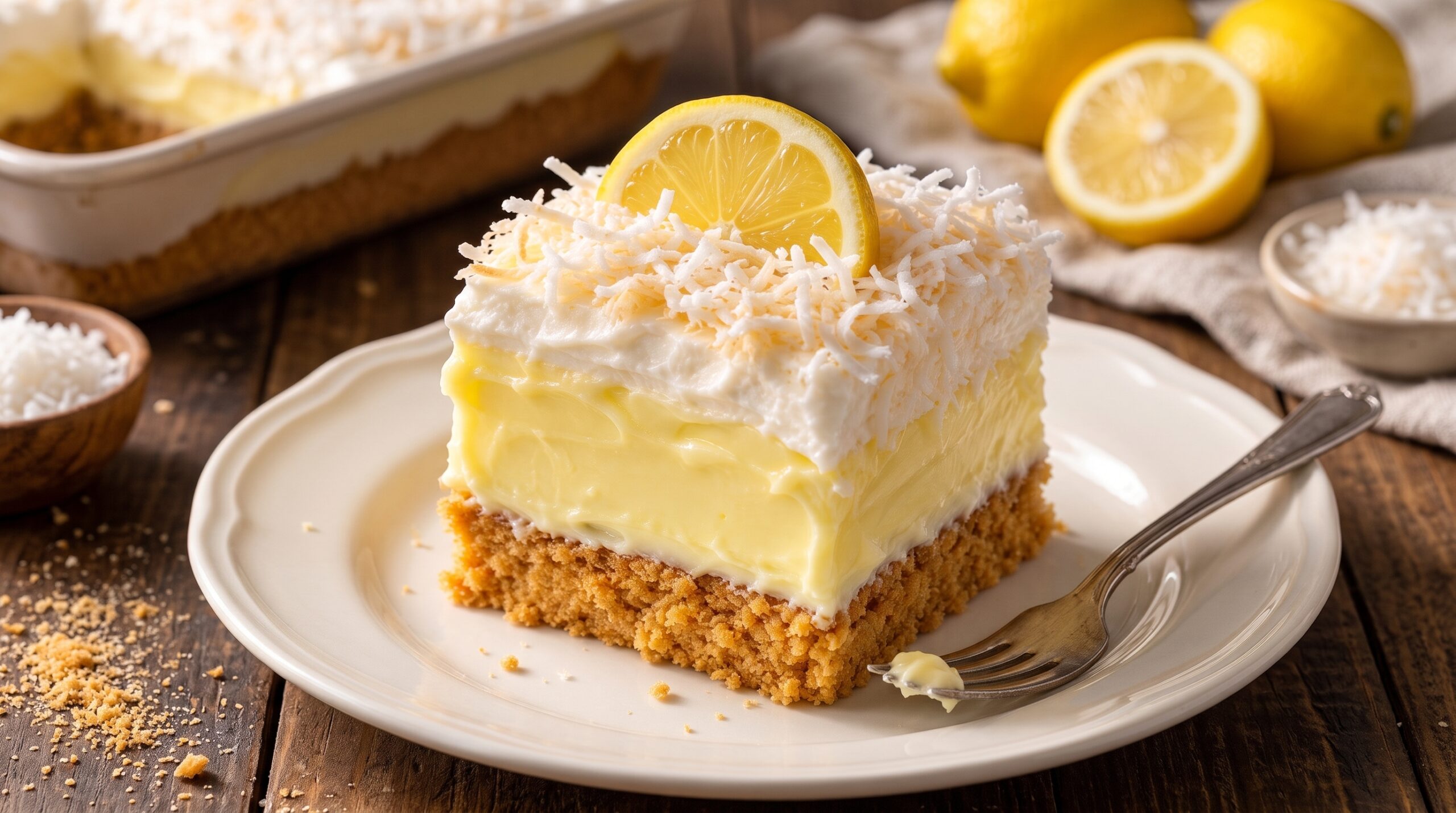
Lemon Coconut Cream Bars are the kind of homemade dessert that makes everyone stop and admire the first slice. Imagine a thick, buttery graham cracker crust supporting an incredibly silky lemon custard, finished with a generous cloud of fluffy coconut cream and delicate white coconut flakes.
Every bite offers something wonderful. The crust is golden and gently crumbly. The pale-yellow lemon filling is rich, smooth, and beautifully tangy. The coconut topping adds softness, sweetness, and a delicate tropical fragrance.
These Southern-inspired Lemon Coconut Cream Bars bring together the nostalgic charm of an old-fashioned family dessert and the elegant appearance of a premium bakery treat.
They are especially lovely for Easter celebrations, spring gatherings, summer cookouts, Sunday dinners, and holiday dessert tables.
Best of all, you don’t need complicated decorating techniques or professional pastry equipment to create those beautiful, thick layers.
The secret is understanding how each component works and allowing enough time for the filling to set properly.
Table of Contents
What Are Lemon Coconut Cream Bars?
Lemon Coconut Cream Bars are a layered, chilled dessert combining a buttery crumb crust, homemade lemon custard filling, and soft coconut whipped cream.
Unlike traditional lemon bars, which commonly feature a baked lemon filling over shortbread, this version emphasizes a generously thick, creamy center.
The filling is made with real egg yolks, milk, heavy cream, fresh lemon juice, cornstarch, butter, and cream cheese.
These ingredients create a rich custard-based filling that becomes firm enough to slice after refrigeration while remaining wonderfully soft on the palate.
The coconut layer provides a beautiful contrast.
Instead of using a heavy buttercream frosting, the recipe finishes with freshly whipped cream blended with thick coconut cream.
The resulting topping feels light and fluffy against the dense, silky lemon filling.
A final sprinkle of shredded coconut and a fresh lemon slice completes the classic Southern bakery-inspired appearance.
A Southern-Inspired Dessert with Homemade Charm
Southern-style desserts often celebrate familiar ingredients, generous portions, and comforting flavors.
Butter, cream, eggs, and fresh fruit have long been important components of American home baking.
This recipe takes that welcoming approach and gives it a bright citrus twist.
It is not presented as a documented historical Southern specialty. Rather, these bars are a modern, Southern-inspired interpretation of traditional lemon desserts, coconut cream pies, and chilled family-style dessert squares.
The result feels nostalgic without sacrificing the luxurious texture that makes a special-occasion dessert memorable.
Why You’ll Love These Lemon Coconut Cream Bars
There are many reasons to keep this recipe close.
First, the contrast between lemon and coconut is especially appealing.
Fresh lemon contributes vibrant acidity, while coconut cream softens the sharper citrus notes.
Second, the dessert offers three clearly defined layers.
The sturdy graham cracker crust supports a generous lemon filling, while the white coconut topping creates a beautiful bakery-style finish.
Third, the bars can be prepared in advance.
Because the filling needs several hours to chill, this is an excellent recipe for anyone planning a family dinner or celebration.
You can prepare the dessert the day before, then cut and decorate it shortly before serving.
Finally, the ingredients are familiar and easy to find in most American grocery stores.
There is no need for specialized baking mixes, gelatin, or artificial lemon pudding.
The creamy filling comes from a real homemade custard.
Lemon Coconut Cream Bars Recipe Overview
| Recipe Detail | Information |
|---|---|
| Recipe name | Southern Lemon Coconut Cream Dream Bars |
| Cuisine | Southern-inspired American |
| Course | Dessert |
| Preparation time | Approximately 30 minutes |
| Baking time | 10 minutes |
| Minimum chilling time | 6 hours |
| Additional time | Cooling the crust and custard |
| Total elapsed time | Approximately 7 hours |
| Yield | 12 generous bars |
| Baking pan | 9×9-inch square pan |
| Difficulty | Intermediate |
| Serving temperature | Chilled |
The recipe requires only a brief baking period for the crust.
The lemon filling is cooked on the stovetop, while the coconut topping is prepared by whipping cold cream.
Plan ahead because properly chilling the layers is essential for clean slicing.
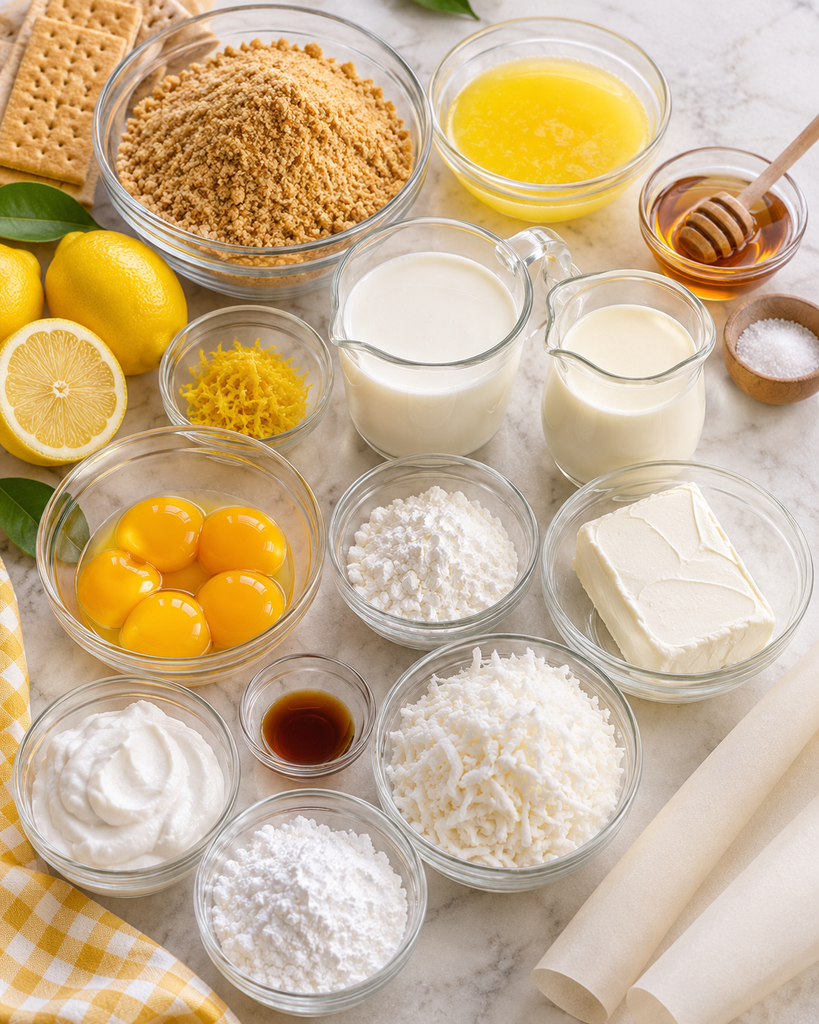
Ingredients for Lemon Coconut Cream Bars
The best Lemon Coconut Cream Bars start with ingredients that deliver flavor, richness, and dependable structure.
For consistent results, measure carefully and use full-fat dairy products where specified.
For the Buttery Graham Cracker Crust
- 2 cups graham cracker crumbs
- ½ cup unsalted butter, melted
- 2 tablespoons honey
- ¼ teaspoon salt
Graham cracker crumbs provide a lightly sweet, golden foundation with a pleasant toasted flavor.
Melted butter binds the crumbs together and helps the crust hold its shape.
Honey adds a delicate floral sweetness that complements the lemon filling.
Salt balances the sweetness and enhances the buttery flavor.
The finished mixture should resemble moist sand and hold together when squeezed.
For the Extra-Thick Lemon Cream Filling
- 1½ cups whole milk
- 1 cup heavy whipping cream
- ¾ cup granulated sugar
- ½ cup freshly squeezed lemon juice
- 2 tablespoons finely grated lemon zest
- 5 large egg yolks
- ⅓ cup cornstarch
- 4 tablespoons unsalted butter
- 8 ounces full-fat cream cheese, softened
- 1 teaspoon vanilla extract
This is the heart of the dessert.
Whole milk and heavy cream create a luxurious dairy base.
Egg yolks contribute richness and help form a smooth custard.
Cornstarch provides additional thickening, helping the lemon layer become firm enough for generous, clean-cut portions.
Fresh lemon juice introduces the necessary tanginess.
Lemon zest contributes fragrant citrus oils without adding significant liquid.
Cream cheese adds body, subtle tang, and a cheesecake-like richness.
Butter rounds out the lemon flavor and leaves the filling silky.
A modest amount of vanilla softens the sharper citrus notes.
For the Fluffy Coconut Cream Topping
- 1½ cups cold heavy whipping cream
- ½ cup thick canned coconut cream, chilled
- ⅓ cup powdered sugar
- ½ teaspoon coconut extract, optional
- 1 teaspoon vanilla extract
Heavy whipping cream creates the topping’s light, airy structure.
Thick coconut cream adds richness and authentic coconut flavor.
Powdered sugar sweetens the topping and dissolves smoothly.
The coconut extract is optional because the coconut cream and shredded coconut already contribute recognizable flavor.
For the Final Garnish
- ¾ cup sweetened shredded coconut
- 12 small fresh lemon slices or wedges
- Additional finely grated lemon zest, optional
The garnish should be attractive but restrained.
White coconut flakes provide a beautiful contrast against the pale-yellow filling.
A small lemon slice on each bar emphasizes the fresh citrus character without overwhelming the presentation.
Choosing the Best Ingredients
Fresh Lemons Make a Noticeable Difference
Use fresh lemons whenever possible.
Bottled lemon juice can provide acidity, but fresh juice and freshly grated zest offer a more complete citrus flavor.
The zest contains aromatic oils that make lemon desserts smell especially inviting.
For additional information about lemon zest and juice in baking, see King Arthur Baking’s guide to baking with lemon.
Choose lemons that feel heavy for their size.
Wash them well, remove the zest before juicing, and avoid grating the bitter white pith.
Why Full-Fat Cream Cheese Matters
Full-fat cream cheese contributes richness and helps the filling maintain its substantial texture.
Reduced-fat varieties contain different proportions of moisture and fat.
Those differences can affect how firmly the chilled filling holds.
For these particularly thick bakery-style bars, full-fat cream cheese is the preferred choice.
Coconut Cream Versus Coconut Milk
Coconut cream and coconut milk are not interchangeable in every recipe.
Canned coconut cream is generally thicker and richer.
That concentrated texture makes it better suited to this fluffy topping.
Avoid refrigerated coconut beverages intended for drinking, which are usually much thinner.
Use the thick portion of chilled coconut cream and stir it smooth before incorporating it into the whipped cream.
Essential Kitchen Equipment
You do not need an elaborate collection of pastry tools.
A few ordinary kitchen essentials are enough:
- 9×9-inch square baking pan
- Parchment paper
- Medium heavy-bottomed saucepan
- Large and medium mixing bowls
- Balloon whisk
- Electric hand mixer
- Measuring cups and spoons
- Fine-mesh sieve
- Rubber spatula
- Offset spatula
- Sharp knife
- Wire cooling rack
A heavy-bottomed saucepan helps distribute heat evenly when cooking the custard.
A whisk is important because the milk, eggs, and cornstarch need to thicken without forming lumps.
An offset spatula makes it easier to achieve smooth, attractive layers.
Parchment paper allows you to lift the entire chilled dessert from the pan before cutting.
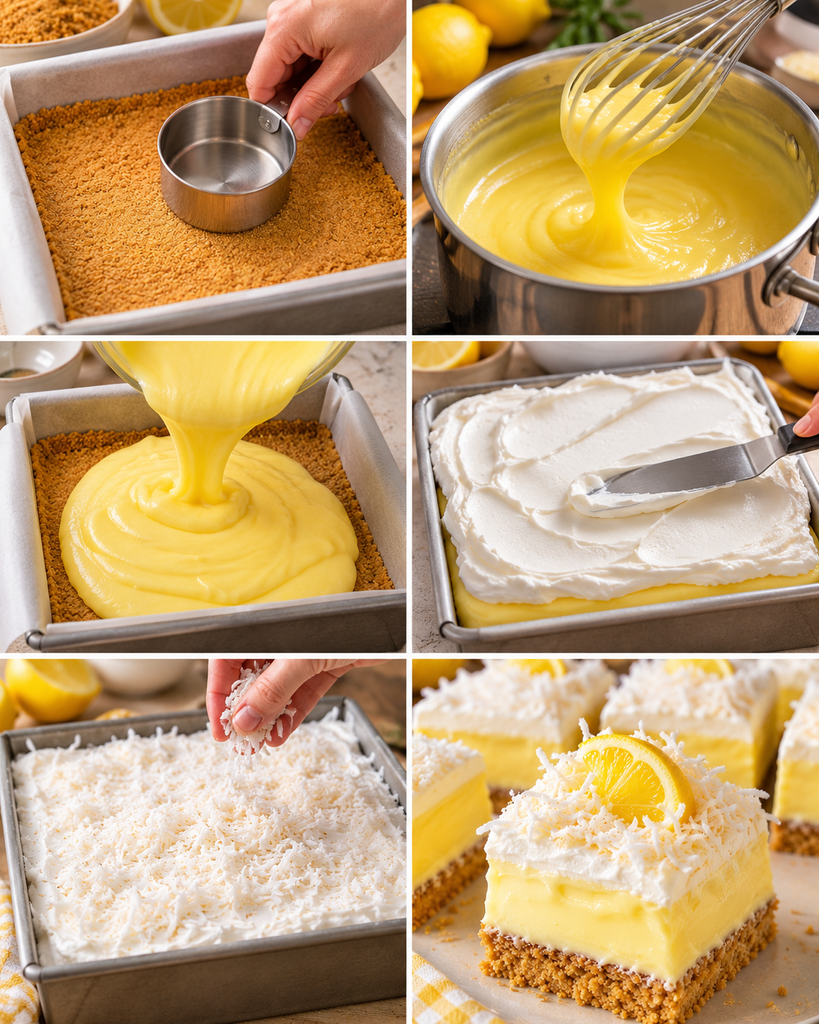
How to Make Lemon Coconut Cream Bars Step by Step
For the best results, prepare each component in order.
The crust must cool before the filling is added, and the lemon layer needs to set before receiving the coconut topping.
Step 1: Prepare the Baking Pan
Preheat your oven to 350°F (175°C).
Line a 9×9-inch square baking pan with parchment paper.
Leave extra parchment hanging over two opposite sides.
These overhanging edges will become handles when you remove the chilled dessert.
Lightly grease any exposed pan surfaces.
Step 2: Make the Buttery Graham Cracker Crust
Combine the graham cracker crumbs, melted butter, honey, and salt in a mixing bowl.
Stir until the crumbs are evenly moistened.
Transfer the mixture to the prepared pan.
Use the bottom of a measuring cup to press the crumbs firmly into an even layer.
Pay particular attention to the corners.
A compact crust is less likely to crumble when the finished bars are sliced.
Bake for approximately 10 minutes, until fragrant and lightly golden.
Remove from the oven and cool completely.
Step 3: Cook the Homemade Lemon Custard
In a heavy-bottomed saucepan, whisk together the sugar and cornstarch.
Gradually add the whole milk and heavy cream, whisking until smooth.
In a separate heatproof bowl, lightly whisk the egg yolks.
Warm the milk mixture over medium-low heat, stirring continuously until hot and beginning to thicken.
Slowly whisk approximately ½ cup of the hot mixture into the egg yolks.
This technique, called tempering, gradually warms the eggs and reduces the risk of scrambling.
Return the tempered yolk mixture to the saucepan.
Continue whisking over medium-low heat until the custard thickens substantially and begins to bubble.
Cook for approximately one additional minute while stirring constantly.
The custard should be very thick, smooth, and glossy.
For the best consistency, avoid rushing this stage.
Step 4: Incorporate the Fresh Lemon
Remove the saucepan from the heat.
Gradually whisk in the fresh lemon juice, lemon zest, butter, and vanilla.
Continue mixing until the butter melts and the custard is completely smooth.
If small lumps remain, pass the mixture through a fine-mesh sieve.
Allow the custard to cool until warm rather than piping hot.
Stir occasionally to keep the texture smooth.
Do not leave the custard standing at room temperature for an extended period.
Step 5: Make the Rich Lemon Cream Filling
Place the softened cream cheese in a large bowl.
Beat until smooth and free of lumps.
Gradually add the warm lemon custard in several additions.
Beat on low speed after each addition until incorporated.
Continue until the mixture becomes thick, uniform, and beautifully pale yellow.
Avoid excessive beating because incorporating too much air can change the texture.
The finished filling should fall slowly from a spatula in broad, heavy folds.
It should not resemble a thin lemon sauce.
Step 6: Spread the Lemon Filling
Make sure the graham cracker crust is completely cool.
Pour the prepared lemon cream over the crust.
Use an offset spatula to spread it evenly toward the corners.
Smooth the top without pressing down into the crumb layer.
The filling should form one generous, clearly defined layer.
Cover the pan and refrigerate for at least four hours, or until the lemon filling is fully set.
A longer chill may be necessary if your refrigerator runs warm or the filling is still soft.
Step 7: Prepare the Coconut Whipped Cream
Pour the cold heavy whipping cream into a chilled mixing bowl.
Add the powdered sugar and vanilla.
Beat until soft peaks form.
In a separate small bowl, stir the chilled, thick coconut cream until smooth.
Gently fold the coconut cream into the whipped cream.
Add the optional coconut extract if desired.
Continue folding just until combined and the topping holds soft, stable peaks.
Avoid overmixing.
The goal is a fluffy, spreadable topping rather than a dense frosting.
Step 8: Build the Coconut Cream Layer
Remove the set lemon filling from the refrigerator.
Spoon the whipped coconut cream over the lemon layer.
Spread gently with an offset spatula.
Create an even, thick white topping with subtle swirls across the surface.
Avoid mixing the white coconut topping into the yellow lemon filling.
Keeping these layers separate creates the distinctive appearance of the finished bars.
Step 9: Add the Coconut Garnish
Sprinkle shredded coconut evenly over the topping.
Use enough to create an attractive white surface without completely burying the cream.
Press the flakes down very gently if necessary.
Return the covered dessert to the refrigerator for at least two more hours.
The topping should be stable and chilled before slicing.
Step 10: Slice into Thick, Beautiful Bars
Lift the dessert from the pan using the parchment handles.
Transfer it to a cutting board.
Use a long, sharp knife to cut 12 generous portions.
For cleaner edges, briefly warm the knife in hot water, dry it thoroughly, then slice.
Wipe the blade between cuts.
Each bar should reveal a golden graham cracker crust, an extra-thick lemon filling, and a fluffy white coconut layer.
Step 11: Garnish and Serve
Transfer the bars to individual white serving plates.
Place one small fresh lemon slice or wedge on each portion.
Finish with a light sprinkle of additional coconut or finely grated lemon zest.
Serve chilled.
The perfect bite combines buttery crumbs, silky lemon cream, and soft coconut topping without any layer overpowering the others.
7 Irresistible Secrets to Perfect Lemon Coconut Cream Bars
Secret 1: Press the Crust Firmly
A loose crumb crust can fall apart when the bars are removed from the pan.
Firm, even pressure helps the butter-coated crumbs form a stable base.
Do not make the crust excessively thick.
It should support the generous cream layers without dominating every bite.
Secret 2: Cook the Custard Until Properly Thickened
The custard must be thick before the cream cheese is added.
If the saucepan is removed too early, the filling may remain soft after refrigeration.
Cornstarch needs sufficient heat to thicken effectively.
Look for a clearly thickened custard with gentle bubbles, rather than relying only on the clock.
Secret 3: Use Both Lemon Juice and Zest
Fresh lemon juice contributes brightness and acidity.
Lemon zest contributes fragrant citrus oils.
Together, they produce a fuller lemon flavor than either ingredient alone.
For these Lemon Coconut Cream Bars, the combination is especially important because the rich cream cheese and coconut topping naturally soften the tartness.
Secret 4: Keep the Cream Cheese Smooth
Room-temperature cream cheese blends more easily into the custard.
Cold cream cheese may leave tiny lumps.
Beat it until completely smooth before gradually adding the warm lemon filling.
This simple step makes a noticeable difference in the finished texture.
Secret 5: Let the Lemon Layer Set Completely
Patience is essential.
Adding coconut cream before the lemon filling has set can cause the layers to blend together.
The finished dessert should have distinct, recognizable layers.
Chilling also helps the bars hold their shape when transferred to a serving plate.
Secret 6: Keep the Coconut Topping Cold
Warm cream does not whip as reliably as properly chilled heavy cream.
Use a cold bowl, cold whipping cream, and thick chilled coconut cream.
Stop whipping once the mixture is sufficiently stable.
Overwhipping can create a grainy appearance.
Secret 7: Slice with a Clean, Sharp Knife
Presentation matters when serving thick layered desserts.
A clean knife helps preserve the distinction between the coconut topping, lemon filling, and graham cracker crust.
Use gentle downward pressure.
Wipe away cream between cuts to prevent streaks along the sides.
These little details help homemade Lemon Coconut Cream Bars look beautifully polished.
Common Lemon Coconut Cream Bars Mistakes
Even a simple layered dessert can present a few challenges.
Fortunately, most problems are preventable.
Why Is My Lemon Filling Too Runny?
The most common causes are insufficient custard cooking, inaccurate cornstarch measurement, or inadequate chilling.
Make sure the custard becomes noticeably thick and bubbles gently before removing it from the stove.
Use the correct amount of cornstarch.
Allow the dessert to chill completely before judging its final consistency.
Why Is My Custard Lumpy?
Lumps often develop when the mixture heats unevenly or is not whisked continuously.
A heavy-bottomed saucepan and moderate heat can help.
If small lumps appear, strain the cooked custard before adding the cream cheese.
Why Does the Crust Crumble?
The graham cracker mixture may not have been pressed firmly enough.
Too little butter can also make the crust fragile.
Press the crumbs evenly and allow the baked base to cool fully before adding the filling.
Why Is the Coconut Topping Soft?
The cream may not have been cold enough, or the coconut cream may have contained too much liquid.
Use thick coconut cream and whip the heavy cream until it can support the topping.
Chill the assembled bars before cutting.
Why Are My Layers Blending Together?
The lemon filling was probably not sufficiently chilled before the coconut topping was added.
Always wait until the custard layer feels set.
Spread the coconut cream gently rather than pressing it into the lemon filling.
Delicious Lemon Coconut Cream Bars Variations
Once you understand the original recipe, small changes can create wonderful seasonal desserts.
Toasted Coconut Lemon Bars
Replace part of the plain shredded coconut garnish with lightly toasted coconut.
The toasted flakes introduce a deeper flavor and gentle crunch.
Keep some white coconut visible to preserve the elegant contrast with the lemon filling.
Lemon Coconut Cheesecake Bars
For a stronger cheesecake character, increase the prominence of the cream cheese flavor while keeping the overall filling properly balanced.
Because substantial ingredient changes affect how a custard sets, use a separately tested cheesecake-style filling rather than simply adding extra cream cheese to the original mixture.
Strawberry Lemon Coconut Bars
Add a small amount of finely chopped, well-drained fresh strawberries as a garnish immediately before serving.
The red berries create a beautiful contrast against the yellow and white layers.
Avoid mixing watery strawberries into the custard.
Honey-Sweetened Crust Variation
The original crust already includes a little honey.
For a stronger honey flavor, choose a mild floral variety.
Avoid replacing all the granulated sugar in the custard with honey without adapting the recipe, because the additional moisture can affect the filling’s final structure.
Serving and Presentation Ideas
These Lemon Coconut Cream Bars are beautiful enough to serve without elaborate decoration.
A white ceramic plate highlights the golden crust, pale-yellow filling, and snowy coconut topping.
For an elegant bakery-style appearance, keep the sides clean and the lemon garnish small.
Serve each portion chilled with a dessert fork or spoon.
The thick filling should hold its shape while remaining soft enough to yield easily under gentle pressure.
Perfect Occasions for This Dessert
During spring, these bars make a lovely addition to Easter celebrations and family brunches.
In summer, their cool lemon filling is particularly refreshing after a backyard meal.
For Thanksgiving or Christmas, they provide a bright alternative to heavier chocolate and caramel desserts.
They also work beautifully for birthdays, baby showers, afternoon coffee gatherings, and Sunday family dinners.
What to Serve with Lemon Coconut Cream Bars
Fresh strawberries, raspberries, or blueberries complement the lemon flavor.
Unsweetened tea, iced tea, or coffee provides a pleasant contrast to the rich filling.
If you are creating a larger dessert table, pair these bars with something chocolatey, such as our Black Cocoa Coconut Cream Pound Cake.
For another old-fashioned Southern dessert, try our Southern Pecan Pralines.
And if you enjoy rich homemade custard desserts, our Vanilla Custard Napoleon offers a different combination of creamy filling and golden pastry.
Make-Ahead and Storage Tips
Can Lemon Coconut Cream Bars Be Made Ahead?
Absolutely.
In fact, making the dessert in advance is one of the easiest ways to achieve a clean, attractive presentation.
Prepare the crust and lemon filling the day before serving.
Once the lemon layer has set, add the coconut topping and refrigerate.
Wait until shortly before serving to add fresh lemon slices.
This prevents the garnish from releasing unnecessary moisture onto the coconut cream.
How Long Do They Last in the Refrigerator?
Store the bars in an airtight container in the refrigerator at 40°F (4°C) or below.
For best appearance and texture, enjoy within three days.
The coconut topping is freshest during the first couple of days, while the crumb crust may gradually soften as it absorbs moisture.
Because this dessert contains eggs and dairy, keep it refrigerated rather than leaving it on the counter.
The FoodSafety.gov cold storage chart provides useful guidance for refrigerated egg-based custard desserts.
Can You Freeze Lemon Coconut Cream Bars?
Freezing the assembled bars is not recommended when appearance and creaminess are priorities.
Thawing can change the structure of the custard and cause the coconut whipped cream to release moisture.
For the most luxurious texture, make the bars fresh, chill properly, and serve refrigerated.
Important Food Safety Reminder
Use fresh, properly refrigerated dairy products and eggs.
Cook the custard thoroughly, then cool and refrigerate promptly.
Do not leave the assembled dessert at room temperature for more than two hours, or more than one hour when the surrounding temperature exceeds 90°F.
See the FoodSafety.gov food safety recommendations for additional guidance.
Frequently Asked Questions About Lemon Coconut Cream Bars
Are Lemon Coconut Cream Bars the Same as Traditional Lemon Bars?
No.
Traditional lemon bars often feature a baked lemon layer over shortbread.
These Lemon Coconut Cream Bars have a cooked custard-and-cream-cheese filling, a graham cracker crust, and a separate whipped coconut cream topping.
The result is thicker, softer, and creamier.
Can I Use Bottled Lemon Juice?
Fresh lemon juice is recommended for its bright flavor.
Bottled lemon juice may work in a pinch, but the taste can be less vibrant.
Always include fresh zest if possible.
Can I Make These Bars Without Coconut Extract?
Yes.
Coconut extract is optional.
Thick coconut cream and shredded coconut provide recognizable coconut flavor without additional extract.
Can I Use a Different Pan Size?
A 9×9-inch pan is recommended for tall bars.
A larger pan will produce thinner layers and may affect setting and presentation.
A smaller pan may make the filling excessively deep.
Use the specified pan size for the closest match to the reference dessert.
Do I Need Gelatin?
No.
The structure comes from properly cooked egg-and-cornstarch custard, cream cheese, and refrigeration.
The coconut topping is supported by whipped cream and thick coconut cream.
Can I Use a Store-Bought Graham Cracker Crust?
A prepared crumb crust can save time, but most ready-made pie crusts have a different shape and capacity.
For thick square bars, a homemade crust pressed into a 9×9-inch pan gives better control.
How Do I Get Perfectly Clean Slices?
Chill the dessert thoroughly.
Use a sharp knife, wipe between cuts, and avoid dragging cream from the top layer down through the crust.
A short pause between cuts is worth the extra effort.
Are These Bars Suitable for a Holiday Dessert Table?
Yes.
Their bright citrus flavor makes them an attractive contrast to traditional chocolate, caramel, pumpkin, and pecan desserts.
They are especially convenient because most of the work can be completed ahead of time.
What Makes the Filling So Creamy?
The combination of whole milk, heavy cream, egg yolks, butter, and cream cheese creates a rich texture.
Cornstarch thickens the custard, allowing it to hold a defined shape while remaining soft.
Proper cooking and chilling are equally important.
Southern Lemon Coconut Cream Dream Bars

Equipment
- 9×9-inch square baking pan For creating thick, evenly layered dessert bars.
- Parchment Paper Line the baking pan with overhanging edges for easy removal.
- medium heavy-bottomed saucepan For gently and evenly cooking the lemon custard.
- large and medium mixing bowls For preparing the crust, cream cheese filling, and coconut topping.
- balloon whisk For mixing and thickening the custard without lumps.
- electric hand mixer For beating the cream cheese and whipping the coconut cream topping.
- Measuring cups and spoons For measuring ingredients accurately.
- fine-mesh sieve For removing any lumps from the cooked custard.
- Rubber spatula For folding and combining ingredients gently.
- offset spatula For creating smooth and clearly defined dessert layers.
- Sharp knife For cutting the chilled dessert into 12 clean portions.
- wire cooling rack For cooling the baked graham cracker crust.
Ingredients
- 2 cups graham cracker crumbs
- ½ cup unsalted butter, melted, for the crust
- 2 tbsp honey
- ¼ tsp salt
- 1 ½ cups whole milk
- 1 cup heavy whipping cream, for the lemon filling
- ¾ cup granulated sugar
- ½ cup freshly squeezed lemon juice
- 2 tbsp finely grated lemon zest
- 5 large egg yolks
- ⅓ cup cornstarch
- 4 tbsp unsalted butter, for the lemon filling
- 8 oz full-fat cream cheese, softened
- 1 tsp vanilla extract, for the lemon filling
- 1 ½ cups cold heavy whipping cream, for the coconut topping
- ½ cup thick canned coconut cream, chilled
- ⅓ cup powdered sugar
- ½ tsp coconut extract, optional
- 1 tsp vanilla extract, for the coconut topping
- ¾ cup sweetened shredded coconut, for garnish
- 12 small fresh lemon slices or wedges, for garnish
- additional finely grated lemon zest, optional garnish
Instructions
- Preheat your oven to 350°F (175°C). Line a 9×9-inch square baking pan with parchment paper, leaving extra parchment hanging over two opposite sides to create handles for lifting the chilled dessert. Lightly grease any exposed pan surfaces.
- Combine the graham cracker crumbs, melted butter, honey, and salt in a mixing bowl. Stir until evenly moistened and resembling wet sand. Transfer to the prepared pan and use the bottom of a measuring cup to press the mixture firmly into an even layer, including the corners. Bake for approximately 10 minutes, until fragrant and lightly golden. Remove from the oven and allow the crust to cool completely.
- In a heavy-bottomed saucepan, whisk together the granulated sugar and cornstarch. Gradually whisk in the whole milk and 1 cup of heavy whipping cream until smooth. In a separate heatproof bowl, lightly whisk the egg yolks. Heat the milk mixture over medium-low heat, stirring constantly until hot and beginning to thicken. Slowly whisk approximately ½ cup of the hot mixture into the egg yolks to temper them. Return the tempered egg mixture to the saucepan. Continue whisking over medium-low heat until the custard becomes substantially thick and begins to bubble. Cook for approximately 1 additional minute, stirring constantly, until thick, smooth, and glossy.
- Remove the saucepan from the heat. Gradually whisk in the freshly squeezed lemon juice, finely grated lemon zest, 4 tablespoons of unsalted butter, and 1 teaspoon of vanilla extract. Mix until the butter melts and the custard becomes completely smooth. If small lumps remain, pass the mixture through a fine-mesh sieve. Allow the custard to cool until warm rather than piping hot, stirring occasionally to maintain a smooth consistency. Do not leave it at room temperature for an extended period.
- Place the softened full-fat cream cheese in a large mixing bowl. Beat until completely smooth and free of lumps. Gradually add the warm lemon custard in several additions, beating on low speed after each addition until incorporated. Continue mixing until the filling becomes thick, uniform, and pale yellow. Avoid excessive beating, which can introduce too much air. The finished lemon cream should fall slowly from a spatula in broad, heavy folds rather than resembling a thin sauce.
- Make sure the graham cracker crust is completely cool. Pour the prepared lemon cream filling over the crust. Use an offset spatula to spread it evenly toward the corners, smoothing the surface without pressing into the crumb layer. Cover the pan and refrigerate for at least 4 hours, or until the lemon filling is fully set. Allow additional chilling time if the filling remains soft.
- Pour 1½ cups of cold heavy whipping cream into a chilled mixing bowl. Add the powdered sugar and 1 teaspoon of vanilla extract. Beat until soft peaks form. In a separate small bowl, stir the chilled, thick coconut cream until smooth. Gently fold the coconut cream into the whipped cream. Add the optional coconut extract if desired. Continue folding just until combined and the mixture holds soft, stable peaks. Avoid overmixing so the topping remains light, fluffy, and spreadable.
- Remove the fully set lemon filling from the refrigerator. Spoon the prepared coconut whipped cream over the lemon layer. Using an offset spatula, spread it gently into an even, thick white topping. Create subtle decorative swirls across the surface. Avoid pressing down or mixing the coconut cream into the lemon filling so the layers remain clearly defined.
- Sprinkle the sweetened shredded coconut evenly over the whipped coconut topping, creating an attractive white surface without completely burying the cream. Gently press the coconut flakes into the topping if necessary. Cover the dessert and return it to the refrigerator for at least 2 additional hours, until the topping is stable and thoroughly chilled.
- Lift the thoroughly chilled dessert from the pan using the parchment paper handles and transfer it to a cutting board. Using a long, sharp knife, cut the dessert into 12 generous bars. For cleaner edges, briefly warm the knife in hot water, dry it completely, and slice. Wipe the blade between cuts to preserve the distinct golden graham cracker crust, thick lemon filling, and fluffy white coconut topping.
- Transfer the bars to individual serving plates. Garnish each portion with one small fresh lemon slice or wedge. Finish with an optional light sprinkle of additional shredded coconut or finely grated lemon zest. Serve chilled to enjoy the combination of buttery graham cracker crumbs, silky lemon cream, and fluffy coconut topping.
Notes
Nutrition
Final Thoughts: A Little Southern Sunshine in Every Bite
There is something wonderfully comforting about a homemade dessert that combines familiar ingredients with beautiful, generous layers.
These Lemon Coconut Cream Bars deliver the perfect balance of fresh citrus flavor, rich creamy filling, fluffy coconut topping, and buttery golden crumbs.
They look impressive enough for a special occasion but remain approachable for home bakers willing to follow a few simple techniques.
Take your time cooking the custard, allow the lemon filling to chill, and keep the coconut topping soft and delicate.
Then slice the bars generously and serve them on your favorite white dessert plates.
Whether you prepare them for Easter, a summer gathering, a holiday celebration, or a quiet Sunday afternoon, these thick and creamy lemon coconut squares bring a little sweetness to the table.
For more nostalgic Southern desserts, homemade bakery favorites, and comforting recipes worth sharing, explore our Southern Bites collection.
From Our Southern Table to Yours!
Don’t Lose This Recipe!
#SouthernComfortDesserts #AstroRecipesMagic #LemonCoconutCreamBars
Recipes I Think You’ll Love