

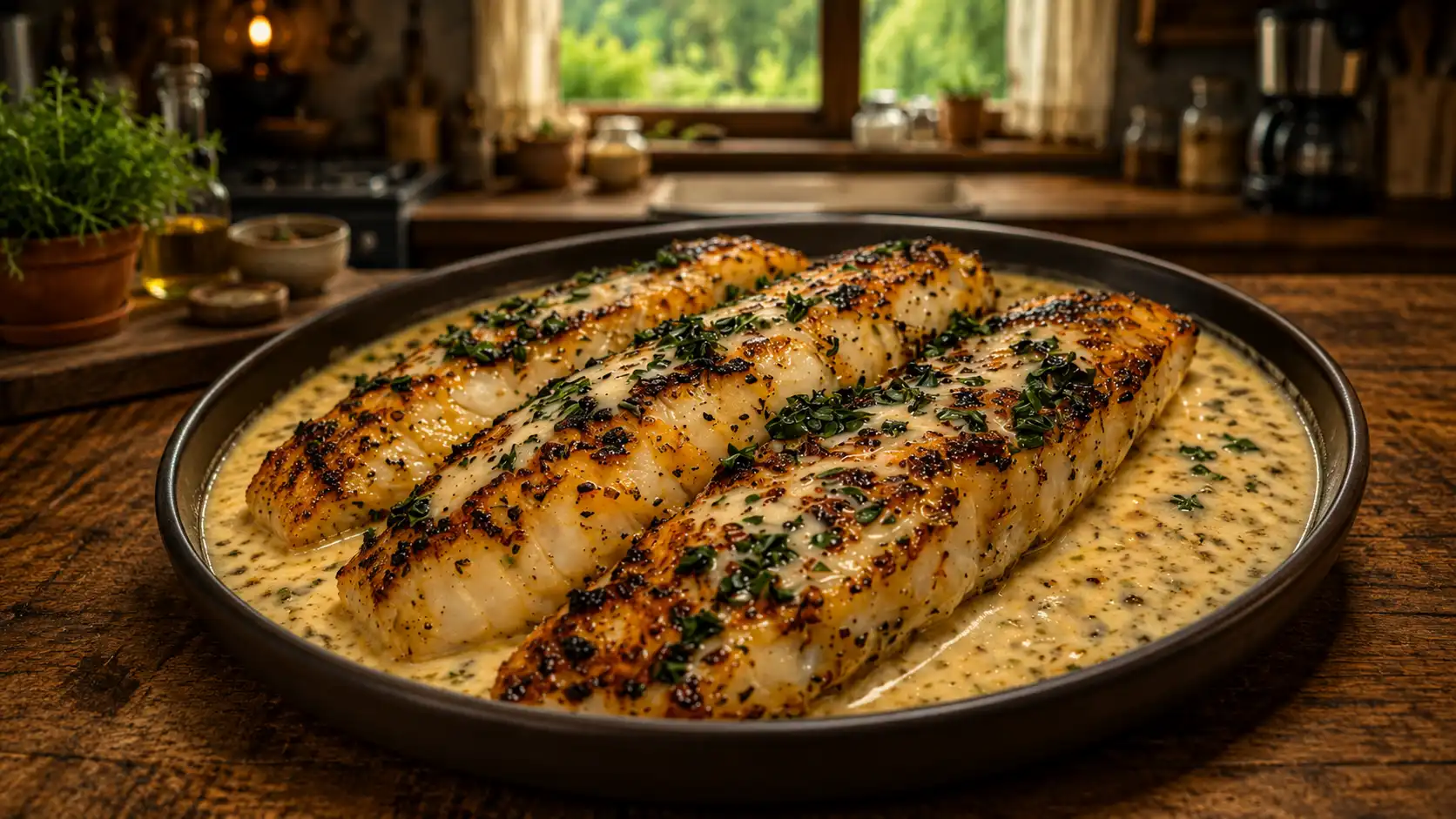
Claire Malin will be the first to admit that the most dangerous recipes in the Southern Bites kitchen are not the slow cooks or the long braises. They are the ones that take twenty minutes, require almost nothing in the way of technique, and produce something so absurdly good that you immediately question why you ever spent money at a restaurant. This Creamy Garlic Butter Fish is exactly that kind of recipe — and yes, it does look too rich to be legal.
What you’re looking at in that pan is golden-seared white fish — thick, flaky fillets with a deeply caramelised crust — sitting in a sauce that is essentially garlic, butter, cream, and herbs at the peak of their powers. The sauce is glossy. It coats everything. It smells like something you would expect from a candlelit bistro, not a weeknight kitchen. And it takes less time to make than it does to order delivery.
This is the recipe for the nights when you want to impress without performing. When you want something that tastes rich and intentional and deeply satisfying, but the reality is a single skillet and a handful of ingredients you already own. Let’s cook.
Table of Contents
Why This Recipe Is Worth Every Calorie
- The sauce is built in the same pan as the fish — all those caramelised bits from the sear go directly into the cream, adding a depth you cannot fake.
- It takes 20 minutes from cold pan to plated dinner. This is genuinely faster than takeaway.
- The garlic butter base works as a platform for endless variations — lemon, white wine, capers, chilli, herbs — all fit naturally.
- It is as elegant as it is comforting. Serve it at a dinner party or eat it standing over the stove on a Tuesday — it works for both.
- One pan. Minimal cleanup. Maximum impact.
Choosing the Right Fish
The fish in the image is white, thick, and holds its shape beautifully under the sauce — pointing to cod, halibut, or haddock. All three are excellent choices for this recipe, and each brings something slightly different.
Cod — The Classic Choice
Thick, mild, and widely available, cod fillets have a satisfying density that stands up to the richness of the sauce without getting lost in it. The natural sweetness of the flesh pairs brilliantly with garlic and cream. Look for centre-cut fillets of at least 2–3 cm thickness.
Halibut — The Luxury Option
Firmer and slightly leaner than cod, halibut has a delicate, buttery flavour of its own that makes the sauce feel even more indulgent. It sears beautifully and holds together better than most white fish. Worth the extra cost for a dinner party.
Haddock — The Southern Favourite
Slightly more flavourful than cod, haddock is a staple of Southern coastal cooking. It is less dense than halibut but more forgiving on heat — it is harder to overcook. An excellent everyday option.
Other Good Options
Sea bass, tilapia, pollock, and barramundi all work well. Avoid thin, delicate fish like sole or flounder — they will not survive the sear without falling apart. Whatever you choose, buy the thickest fillets available and pat them completely dry before they touch the pan.
Ingredients
Serves 4 | Prep: 5 minutes | Cook: 15–20 minutes
For the fish:
- 4 thick white fish fillets (cod, halibut, or haddock) — 170–200g / 6–7 oz each
- 1½ teaspoons kosher salt
- 1 teaspoon freshly ground black pepper (generous — the pepper is visible and intentional in this dish)
- 1 teaspoon smoked paprika
- ½ teaspoon garlic powder
- 2 tablespoons olive oil
- 1 tablespoon unsalted butter (for searing)
For the creamy garlic butter sauce:
- 4 tablespoons unsalted butter
- 6 cloves garlic, finely minced (do not use pre-minced — fresh garlic is non-negotiable here)
- 1 small shallot, finely diced
- 180 ml (¾ cup) heavy cream or double cream
- 80 ml (⅓ cup) dry white wine or dry vermouth (or substitute chicken stock)
- 1 tablespoon Dijon mustard
- 1 tablespoon fresh lemon juice
- ½ teaspoon lemon zest
- Salt and white pepper to taste
To finish:
- 2 tablespoons fresh flat-leaf parsley, finely chopped
- 1 tablespoon fresh chives or dill, finely chopped
- Flaky sea salt for serving
- Lemon wedges on the side
- Optional: 1 tablespoon capers (drained) for brightness
Step-by-Step Instructions
Step 1 — Prep and Season the Fish
Remove the fish from the refrigerator 15 minutes before cooking — this helps it sear evenly rather than cooking cold in the centre. Pat each fillet completely dry with paper towels on all sides. Any moisture on the surface will steam the fish instead of searing it, and you will lose that golden crust that makes this dish.
Mix the salt, pepper, smoked paprika, and garlic powder in a small bowl. Season the fish evenly on both sides, pressing the seasoning gently into the flesh.
Step 2 — Sear the Fish
Heat a large, heavy-bottomed skillet — cast iron is ideal — over medium-high heat until genuinely hot. Add the olive oil and the tablespoon of butter together. When the butter foams and begins to smell nutty, lay the fish fillets in the pan away from you, presentation-side down.
Do not touch them. Do not prod them. Do not move them. Let the fish sear for 3 to 4 minutes until you can see a dark golden crust climbing up the sides. The fish will release from the pan naturally when it is ready to flip — if it sticks, it needs another minute. Flip once and cook for a further 2 to 3 minutes on the second side. Remove the fish to a plate and tent loosely with foil.
Step 3 — Build the Garlic Butter Base
Reduce the heat to medium. Add the 4 tablespoons of butter to the same pan — those caramelised brown bits on the bottom of the pan are pure flavour and they are going into your sauce. Let the butter melt, then add the diced shallot. Cook for 2 minutes, stirring frequently, until softened and just turning golden.
Add the minced garlic and cook for exactly 60 seconds, stirring constantly. You want the garlic fragrant and golden — not brown. Brown garlic turns bitter and will ruin the sauce. Keep it moving.
Step 4 — Deglaze and Build the Cream Sauce
Pour in the white wine or vermouth and let it bubble vigorously, scraping the bottom of the pan to lift every bit of the seared fish residue. This is the moment the sauce finds its depth. Let the wine reduce by half — about 90 seconds.
Reduce the heat to medium-low and pour in the heavy cream. Stir in the Dijon mustard, lemon juice, and lemon zest. Stir gently and let the sauce simmer — not boil — for 3 to 4 minutes until it thickens to a consistency that coats the back of a spoon. Taste and adjust with salt, white pepper, and more lemon if needed.
Step 5 — Return the Fish to the Sauce
Gently nestle the seared fish fillets back into the sauce, presentation-side up. Spoon the sauce over the top of each fillet and let everything rest in the pan together over low heat for 1 to 2 minutes — just long enough for the fish to finish cooking through and absorb the flavour of the sauce.
Step 6 — Finish and Serve
Add the capers if using. Scatter generously with fresh parsley and chives. Finish with a pinch of flaky sea salt over each fillet. Serve immediately, directly from the pan if you like — there is no shame in a skillet on the table, and frankly it looks better that way.
Pro Tips for a Flawless Result
Dry fish is golden fish. Moisture is the single biggest enemy of a good sear. Pat the fillets until they are visibly dry — use more paper towels than you think you need.
Hot pan, cold oil. Always heat your pan first, then add oil. This creates a better non-stick surface and a faster, more even sear.
Butter and oil together. Butter alone burns at searing temperatures. The oil raises the smoke point; the butter delivers flavour and colour. Use both.
Don’t flip early. The fish tells you when it’s ready. If you try to lift it and it resists, it needs more time. Patience here equals a perfect crust.
Garlic timing is everything. Sixty seconds in butter at medium heat is the sweet spot. Set a timer if you need to — it makes a measurable difference.
Cream sauce should simmer, never boil. A boiling cream sauce can break and turn grainy. Keep the heat gentle and patient and you will be rewarded with pure silk.
White pepper in cream sauces. It blends invisibly and adds warmth without the visual contrast of black pepper in a pale sauce. Use it alongside the black pepper seasoning on the fish.
Variations Worth Exploring
Cajun Garlic Butter Fish: Swap the smoked paprika and garlic powder for a heavier Cajun spice blend — cayenne, oregano, onion powder, and thyme. Add a pinch of cayenne to the cream sauce. Finish with hot sauce and serve over dirty rice for a full Southern coastal dinner.
Lemon Caper Garlic Butter Fish: Add 2 tablespoons of drained capers and a teaspoon of anchovy paste to the garlic butter stage. Skip the Dijon. The briny, salty depth from the capers and anchovy elevates this into something genuinely restaurant-calibre.
Herb & White Wine Cream Fish: Double the white wine, skip the cream, and finish with a tablespoon of crème fraîche instead. Add fresh tarragon and a handful of baby spinach wilted into the sauce. Lighter, brighter, and equally special.
Parmesan Garlic Cream Fish: Stir 3 tablespoons of finely grated Parmesan into the cream sauce as it simmers. It thickens the sauce further and adds a savoury, nutty depth. Serve over pappardelle or linguine for a complete pasta dish.
Dairy-Free Version: Replace the butter with good-quality vegan butter and the cream with full-fat coconut cream. The sauce will have a very subtle coconut note that actually works beautifully with garlic and white fish — lean into it with a little fresh ginger and lime.
What to Serve Alongside
The sauce is the star, and whatever you serve should be built to soak it up.
- Creamy mashed potatoes — the pooling sauce soaks in and turns every bite into something extraordinary
- Buttery white rice or basmati — simple, honest, perfect
- Crusty sourdough or a baguette — for the non-negotiable sauce-mopping moment
- Steamed or roasted asparagus — the clean, grassy notes cut through the richness beautifully
- Wilted spinach or sautéed garlic green beans — quick, light, and balance the sauce
- Creamy polenta — a Southern and Italian crossover that feels elegant and rustic simultaneously
- Wide egg noodles or pappardelle — toss the extra sauce through the pasta for a complete meal
Why This Belongs on a Southern Table
Southern coastal cooking has always done extraordinary things with white fish — from the blackened catfish of Louisiana’s Cajun tradition to the pan-fried whiting served at church fish fries across the Carolinas and Georgia. The principle is always the same: fresh fish, a hot cast iron, and a sauce that makes the whole thing feel like a celebration.
This creamy garlic butter version sits squarely in that tradition, with a nod to the French-Creole influence that shaped so much of Southern coastal cuisine. The garlic is generous. The butter is unrepentant. The cream is not optional. And the result is exactly the kind of dish that Southern Bites exists to celebrate — unpretentious enough for a weeknight, impressive enough to put on the table for guests without a single apology.
It is, in the best possible way, too rich to be legal. That is entirely the point.
Storage & Reheating
Cream-based fish dishes are at their absolute peak the moment they leave the pan. That said, leftovers keep well in an airtight container in the refrigerator for up to 2 days. The sauce will firm up considerably when cold — this is the fat solidifying, not the sauce spoiling.
To reheat: place the fish and sauce in a covered skillet over low heat with a splash of cream or stock to loosen. Warm gently and slowly — do not let it boil or the cream sauce will break and the fish will overcook. It should take no more than 5 minutes to come back to temperature.
Freezing is not recommended for this dish. The cream sauce does not freeze gracefully, and the fish texture suffers significantly on thawing. Make it fresh. It takes twenty minutes. You can do this.
A Final Word from the Southern Bites Kitchen
There is a particular pleasure in a dish that overdelivers. That asks almost nothing from you — twenty minutes, one pan, six ingredients in a sauce — and gives you something that looks and tastes like it required far more. This Creamy Garlic Butter Fish is that dish.
Claire Malin has served this at dinner parties where guests asked for the recipe before they had finished their first forkful. She has made it for herself on a quiet Tuesday and eaten it directly from the skillet over the sink — no plates, no ceremony, just the sauce and a piece of bread and a brief, private moment of satisfaction.
Both are the correct way to eat it. Make it once and decide for yourself.
Join our Facebook page for more egg hacks and quick breakfast ideas:
Recipes I Think You’ll Love