
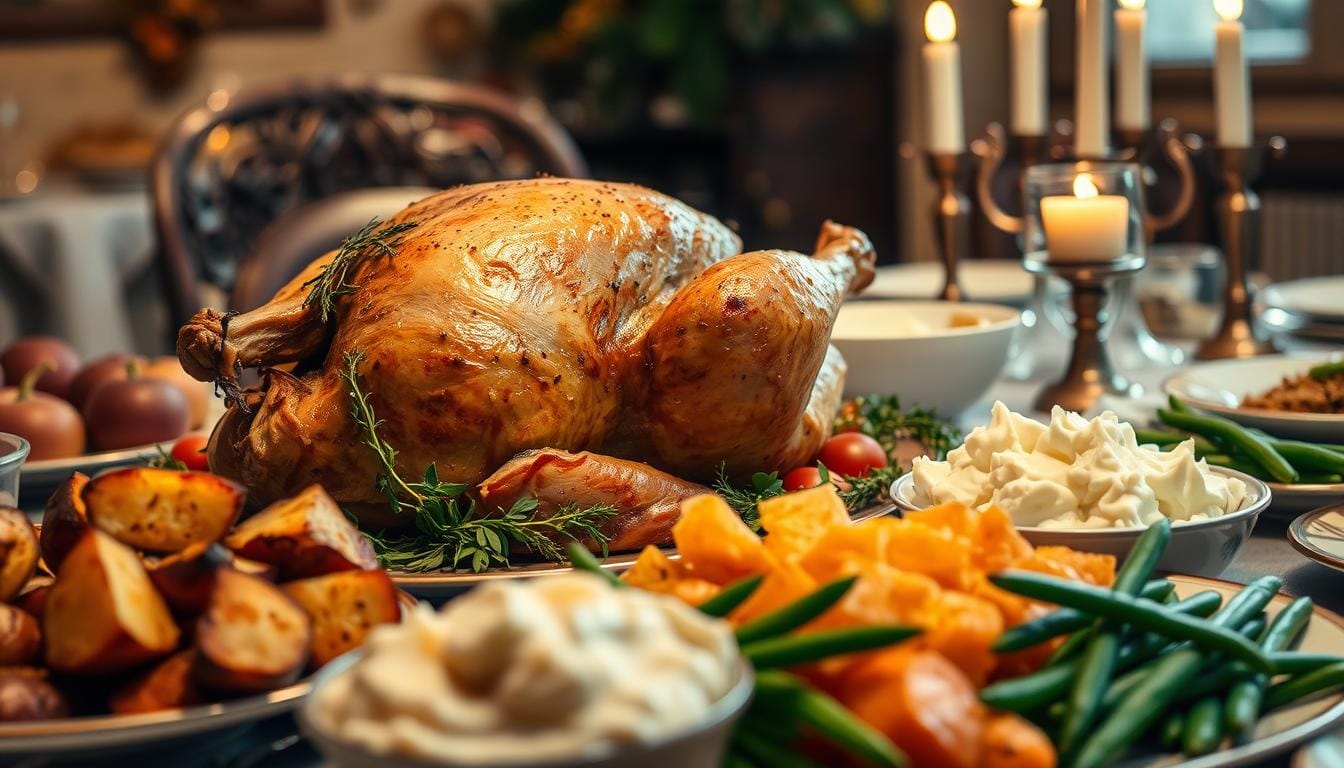
Every Thanksgiving, the kitchen fills with the smell of a perfectly roasted turkey. This smell brings families together, creating a warm and inviting atmosphere. The roast turkey is more than just a meal; it’s a tradition that connects generations.
Preparing a roast turkey for Thanksgiving is more than cooking. It’s about creating a memorable feast. From picking the right bird to mastering roasting, each step is special.
This guide will help you make the perfect roast turkey, whether you’re new to cooking or experienced. We’ll cover techniques to ensure your turkey is delicious and impressive. Your family and friends will be asking for seconds.
Get ready to make your Thanksgiving dinner unforgettable with a roast turkey. It will be crispy on the outside, juicy on the inside, and full of flavor. This turkey will capture the essence of the holiday tradition.
Perfect Roast Turkey for Thanksgiving

Equipment
- roasting pan with rack
- Meat Thermometer
- basting brush or spoon
- Carving Knife
- Cutting Board
Ingredients
- 1 whole turkey (12–14 lbs), thawed
- ½ cup unsalted butter or olive oil
- 2 tbsp kosher salt
- 1 tbsp black pepper, freshly ground
- 1 lemon, quartered
- 1 orange, quartered
- 6 garlic cloves
- 4 sprigs fresh rosemary
- 4 sprigs fresh thyme
- 4 sprigs fresh sage
- 2 cups chicken broth (for basting)
Instructions
- Preheat oven to 325°F (165°C). Remove the turkey giblets and pat the turkey dry with paper towels.
- Season the turkey generously inside and out with salt and pepper. Stuff the cavity with lemon, orange, garlic, and fresh herbs.
- Brush the turkey with melted butter or olive oil. Place it on a roasting rack in a large roasting pan.
- Roast the turkey for about 15 minutes per pound, basting every 30–45 minutes with pan juices or broth.
- Use a meat thermometer to check doneness: 165°F for breast, 175°F for thigh, 180°F for stuffing (if applicable).
- Let the turkey rest for 20–30 minutes before carving. This helps retain moisture and makes slicing easier.
Notes
Nutrition
Table of Contents
The Importance of Choosing the Right Turkey
Choosing the perfect turkey is key for a memorable holiday meal. The right turkey can elevate your dish, making it a hit with your guests.
Types of Turkey to Explore
There are many turkey options for your holiday feast:
- Heritage Breeds: Known for rich, intense flavor
- Organic Turkeys: Raised without synthetic pesticides
- Free-Range Turkeys: Allowed more outdoor movement
- Kosher Turkeys: Pre-salted and carefully processed
Fresh vs. Frozen Turkey Considerations
Understanding fresh vs. frozen turkeys is important:
| Fresh Turkey | Frozen Turkey |
|---|---|
| Higher moisture content | Lower cost |
| Must be purchased 1-2 days before cooking | Can be stored for months |
| Potentially more tender | Requires thorough thawing |
Sizing Your Turkey Perfectly
Choosing the right turkey size is important:
- 4-6 people: 8-12 pound turkey
- 6-8 people: 12-16 pound turkey
- 8-10 people: 16-20 pound turkey
- 10-12 people: 20-24 pound turkey
Remember, plan for 1-1.5 pounds per person. This ensures everyone gets enough and you have leftovers for later.
Preparing Your Turkey for Roasting
Preparing a perfect roast turkey needs careful steps and attention. A great turkey recipe starts before it goes in the oven. This ensures a tasty, juicy, and safe meal that will wow your guests.
Essential Ingredients for Flavor
To make your turkey taste amazing, pick the right ingredients. Here are some key ones:
- Fresh herbs like rosemary, thyme, and sage
- Citrus fruits (lemon or orange) for brightness
- Garlic cloves
- Butter or olive oil
- Kosher salt and freshly ground black pepper
Steps for Properly Thawing Your Turkey
Thawing a turkey takes time and careful planning. Here’s a safe way to thaw it:
- Refrigerator Thawing (Recommended Method):
- Allow 24 hours of thawing time for every 4-5 pounds of turkey
- Keep turkey in original packaging
- Place on a tray to catch any drips
- Cold Water Thawing:
- Submerge turkey in cold water
- Change water every 30 minutes
- Allow approximately 30 minutes per pound
Brining: Should You Do It?
Brining can make your turkey truly special. It involves soaking the turkey in a saltwater solution. This boosts moisture and flavor.
| Brining Type | Benefits | Time Required |
|---|---|---|
| Wet Brining | Adds maximum moisture | 12-24 hours |
| Dry Brining | Concentrates turkey flavor | 1-3 days |
Pro tip: If you brine, always rinse the turkey well and pat it dry. This helps get crispy skin and perfect seasoning.
Perfecting Your Roasting Technique
To make the perfect Thanksgiving dinner centerpiece, you need to master roasting. The right technique can turn an ordinary turkey into a memorable dish. It will impress your family and friends.
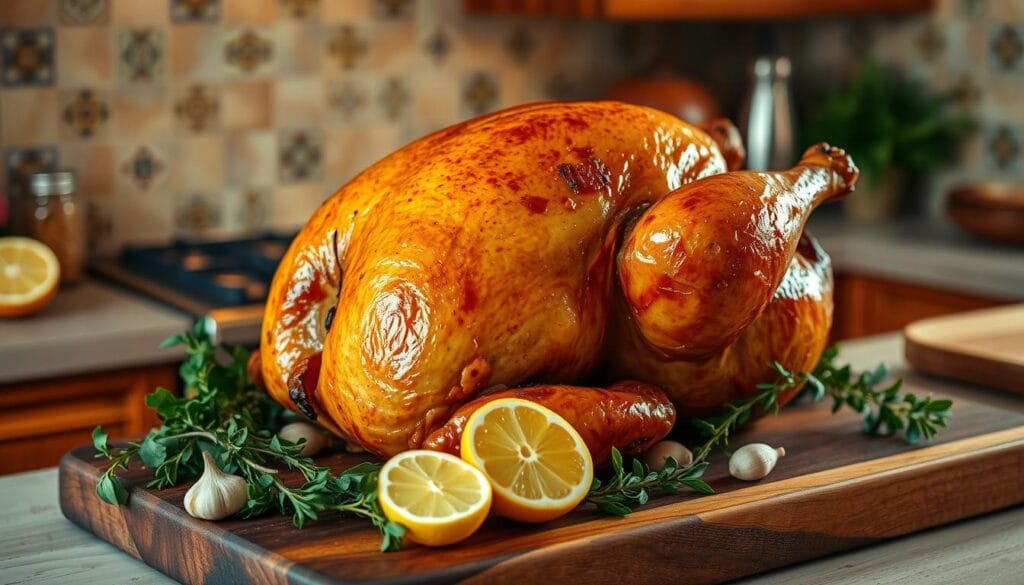
Roasting a turkey requires precision and attention to detail. Success depends on understanding key cooking principles. These ensure a delicious and safe meal.
Oven Temperature and Cooking Time
Achieving the perfect roast involves careful temperature management. Follow these essential guidelines:
- Preheat your oven to 325°F (165°C)
- Calculate cooking time based on turkey weight
- Plan approximately 15 minutes per pound for unstuffed turkeys
- Use a roasting pan with a rack to promote even cooking
The Role of Basting
Basting keeps your Thanksgiving dinner turkey moist and flavorful. Use these techniques:
- Baste every 30-45 minutes
- Use pan drippings or melted butter
- Avoid opening the oven too frequently
Using a Meat Thermometer to Ensure Safety
A meat thermometer is your most reliable tool for checking doneness. Insert the thermometer into the thickest part of the thigh without touching bone. The internal temperature should reach:
- 165°F (74°C) for the breast
- 175°F (79°C) for the thigh
- 180°F (82°C) for the stuffing
By following these roasting techniques, you’ll create a succulent holiday main course. It will be the highlight of your Thanksgiving dinner.
Flavor Enhancements and Stuffing Options
Turning your roast turkey into a masterpiece starts with the right seasonings and stuffing. The perfect mix of herbs, spices, and fillings can make your turkey the star of the holiday.
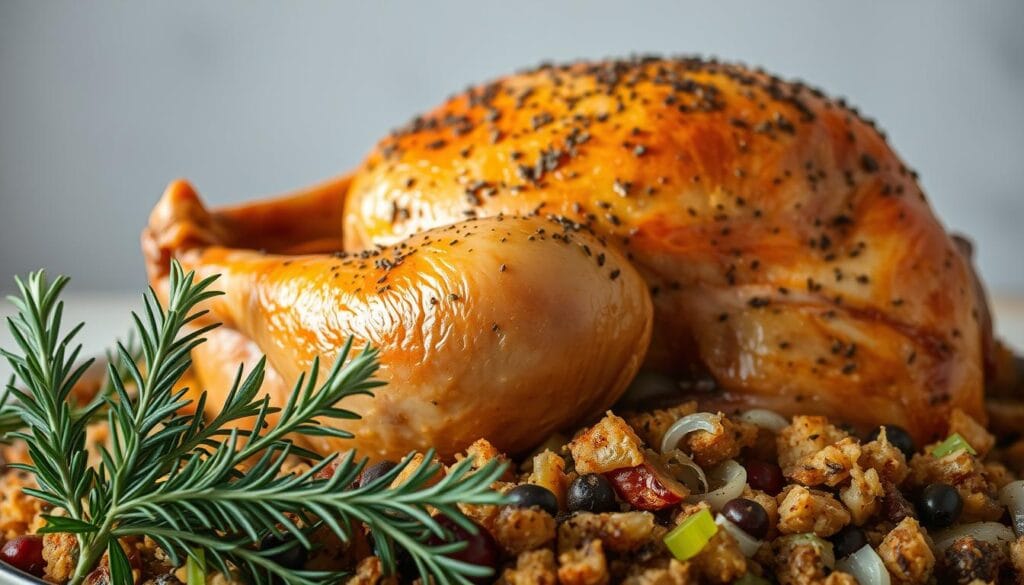
Popular Seasonings and Herbs
Choosing the right seasonings is key to a flavorful turkey. Here are some classic herb mixes:
- Rosemary and thyme for a traditional taste
- Sage and garlic for a strong, earthy flavor
- Paprika and cayenne for a hint of spice
- Lemon zest and parsley for a fresh, bright taste
Homemade Stuffing Recipes
A homemade stuffing can make your turkey unforgettable. Here’s a classic bread-based stuffing that pairs well with turkey:
| Ingredient | Quantity |
|---|---|
| Dried bread cubes | 8 cups |
| Onions, diced | 2 cups |
| Celery, chopped | 1 cup |
| Butter | 1/2 cup |
| Chicken broth | 2 cups |
| Fresh herbs (sage, thyme) | 2 tablespoons |
Alternative Stuffing Ideas
Looking for something different? Try these unique stuffing ideas:
- Cornbread Stuffing: A Southern twist with a sweet flavor
- Quinoa and vegetable stuffing for a gluten-free option
- Wild rice and mushroom stuffing for a rich taste
- Chestnut and sausage stuffing for a hearty choice
“The secret to an unforgettable turkey is not just in the cooking, but in the careful selection of seasonings and stuffing.” – Professional Chef
Tips for Serving and Storing Leftovers
After enjoying your Thanksgiving dinner, it’s important to handle leftovers well. Learn how to carve, transform recipes, and store food properly. This will help you make the most of your roast turkey.
Carving Your Turkey with Precision
To carve your turkey like a pro, let it rest for 20-30 minutes after roasting. Use a sharp knife and a sturdy board. Start by removing the legs, then slice the breast against the grain.
This method ensures tender, beautiful slices. They will look great on your serving platter.
Reimagining Turkey Leftovers
Turn your holiday main course into new meals. Try turkey sandwiches, pot pies, hearty soups, or salad toppings. You can also make turkey chili or creamy turkey tetrazzini.
These ideas will keep your meals exciting and reduce waste.
Safe Storage Strategies
Refrigerate leftover turkey within two hours of cooking. Store it in shallow containers and eat within 3-4 days. For longer storage, freeze in airtight containers or bags for up to four months.
Always reheat leftovers to 165°F. This ensures safety and keeps the flavor delicious.