

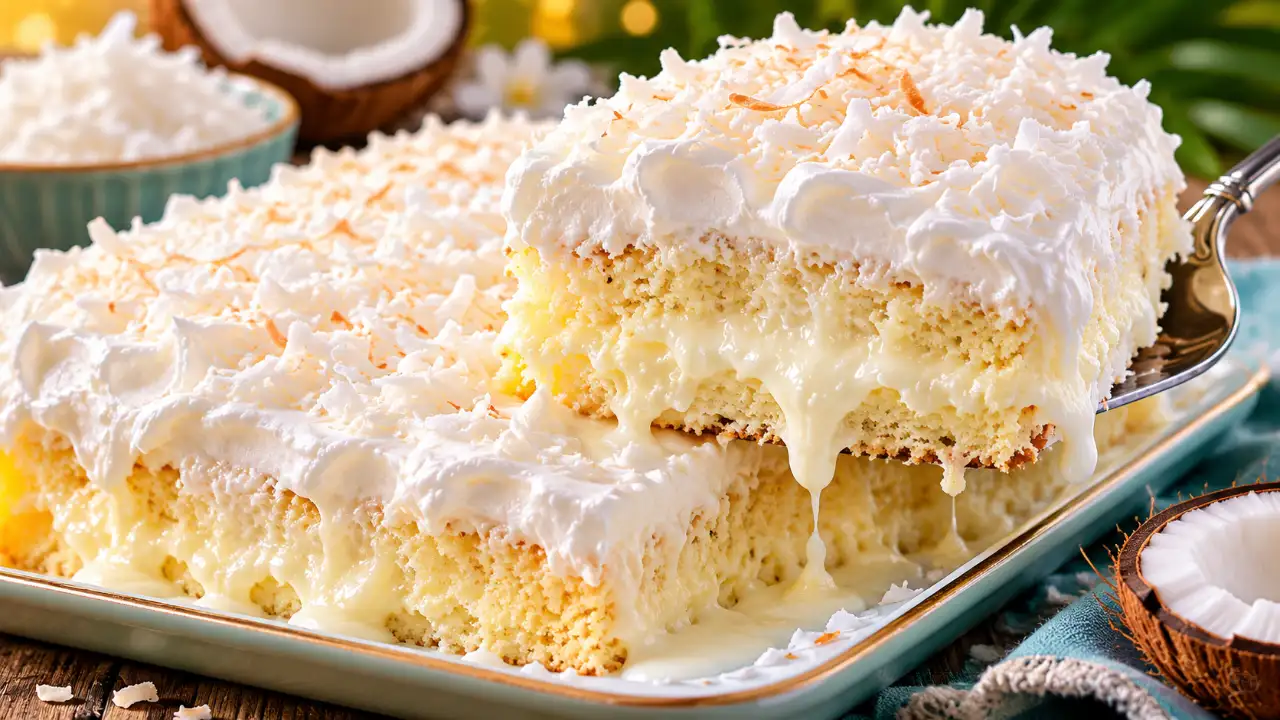
A Soft Coconut Sheet Cake Soaked in Coconut Cream — And Worth Every Patient Hour
There is a cake that arrives at the table in June, when the kitchen windows are open and everything smells like heat and grass and possibility, and it is always this one. White. Blanketed in coconut. Cold from the refrigerator. Already quietly perfect before anyone has taken a slice.
Coconut dream cake. Nora Beckett has been making versions of this for years — different soaks, different crumbs, different occasions — but the architecture has never changed because the architecture was always right. You bake a soft, buttery coconut sheet cake. While it is still warm — still breathing from the oven, the crumb still open and yielding — you poke it all over and pour a slow, generous mixture of sweetened condensed milk, full-fat coconut milk, and heavy cream into every hole, every crevice, every willing channel the warm cake offers. You let it cool. You refrigerate it overnight. You top it the next morning with whipped coconut cream and a thick, snowy blanket of shredded coconut. You serve it cold.
The result is not simply a coconut cake. It is the coconut cake — the one that earns the name. Rich in a way that is not heavy. Moist in a way that feels intentional, not accidental. The kind of dessert that makes summer feel like it was arranged specifically around this moment.
“A recipe isn’t just instructions. It’s an invitation to live in the moment you’re cooking for.”
Table of Contents
What This Cake Tastes Like
Nora has always believed that food tastes like a place before it tastes like its ingredients. And coconut dream cake tastes like somewhere warm — like a July afternoon that stretched long past dinner, like the kind of kitchen that smells of vanilla and heat and something tropical that has no business being this good indoors.
The coconut is everywhere in this cake. In the batter, where shredded coconut is folded into the crumb alongside a full cup of rich coconut milk. In the soak, where it arrives in its most concentrated, creamy form — sweetened condensed milk and coconut milk and cream poured slowly into a warm cake that is ready to receive every drop. In the topping, where whipped cream carries coconut extract and shredded coconut covers the surface like the first snowfall of a season that belongs to warmth rather than cold.
It is a cake built for sharing at tables where people are happy to be there. For birthdays in June. For family gatherings on porches. For any afternoon that deserves to be remembered.
The Soak — Why It Changes Everything
Every great version of this cake has at its centre the same act of trust: you poke the warm cake and you pour the liquid in and you wait. You wait two hours, or preferably overnight, and you trust that the cake knows what to do with the soak far better than you could engineer.
The technique comes from tres leches tradition — Latin American baking’s most patient and generous contribution to the world of cakes. A sponge, still warm and porous, receives a milk soak that travels down through the crumb by gravity and time, transforming the texture from tender to something richer and more cohesive. Here, the three milks are sweetened condensed milk, full-fat coconut milk, and heavy cream. The condensed milk adds body and a caramel-adjacent sweetness that deepens in the refrigerator overnight. The coconut milk carries the flavour into the crumb itself — so that when you eat a forkful of this cake, the coconut is not just on the surface but inside every bite, present from the first moment to the last.
The instruction that matters most: poke while the cake is warm and pour immediately. A cold cake closes against the liquid. A warm cake opens to it. This is not a metaphor — it is the physics of the crumb, and understanding it changes how you relate to the recipe. You are not simply following instructions when you pour the soak over a warm cake. You are working with the cake’s own readiness. That is a different kind of cooking.
What You Will Need
Serves 12–15 | Prep: 25 min | Bake: 28–32 min | Chill: overnight preferred
For the Coconut Cake:
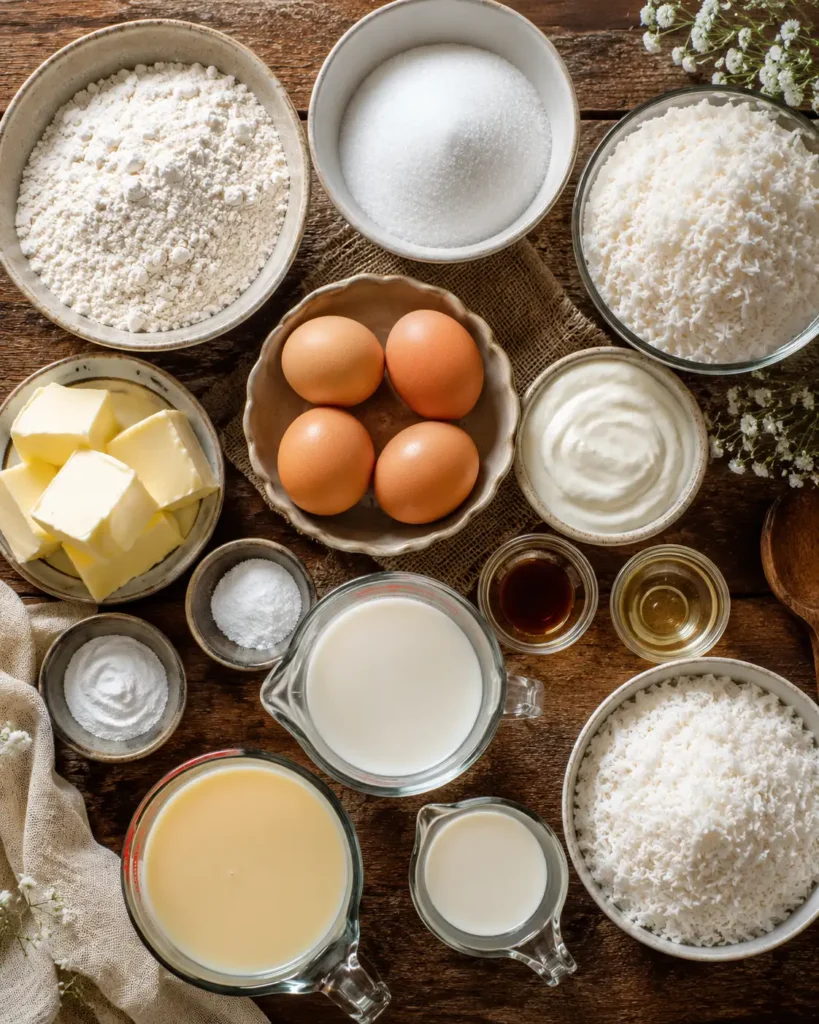
- 2½ cups (315g) all-purpose flour
- 2 teaspoons baking powder
- ½ teaspoon baking soda
- ½ teaspoon fine salt
- 1 cup (225g) unsalted butter, softened to room temperature
- 1¾ cups (350g) granulated sugar
- 4 large eggs, at room temperature
- 1 teaspoon pure vanilla extract
- 1 teaspoon coconut extract
- 1 cup (240ml) full-fat coconut milk, from a can — shaken before measuring
- ½ cup (120g) full-fat sour cream
- 1 cup (90g) sweetened shredded coconut
For the Coconut Cream Soak:
- 1 can (14 oz / 397g) sweetened condensed milk
- 1 cup (240ml) full-fat coconut milk, from a can
- ½ cup (120ml) heavy cream
- ½ teaspoon coconut extract
For the Whipped Coconut Cream Topping:
- 2 cups (480ml) cold heavy whipping cream
- ½ cup (60g) powdered sugar, sifted
- 1 teaspoon pure vanilla extract
- ½ teaspoon coconut extract
- 2 cups (180g) sweetened shredded coconut — plus extra for edges and top
How to Make It — Step by Step
Before you begin: take the butter, eggs, and sour cream out of the refrigerator. Room temperature ingredients cream smoothly and bake evenly. Give them an hour, and the batter will reward you for it.
Step 1 — Heat the oven. Prepare the pan.
Preheat to 350°F (175°C). Grease and lightly flour a 9×13-inch baking dish. If you want to lift the finished cake out cleanly, line the base with a strip of parchment and grease the parchment too. This is a sheet cake and the dish is its home — you can also bake and serve directly from it, which is the most honest approach.
Step 2 — Whisk the dry ingredients.
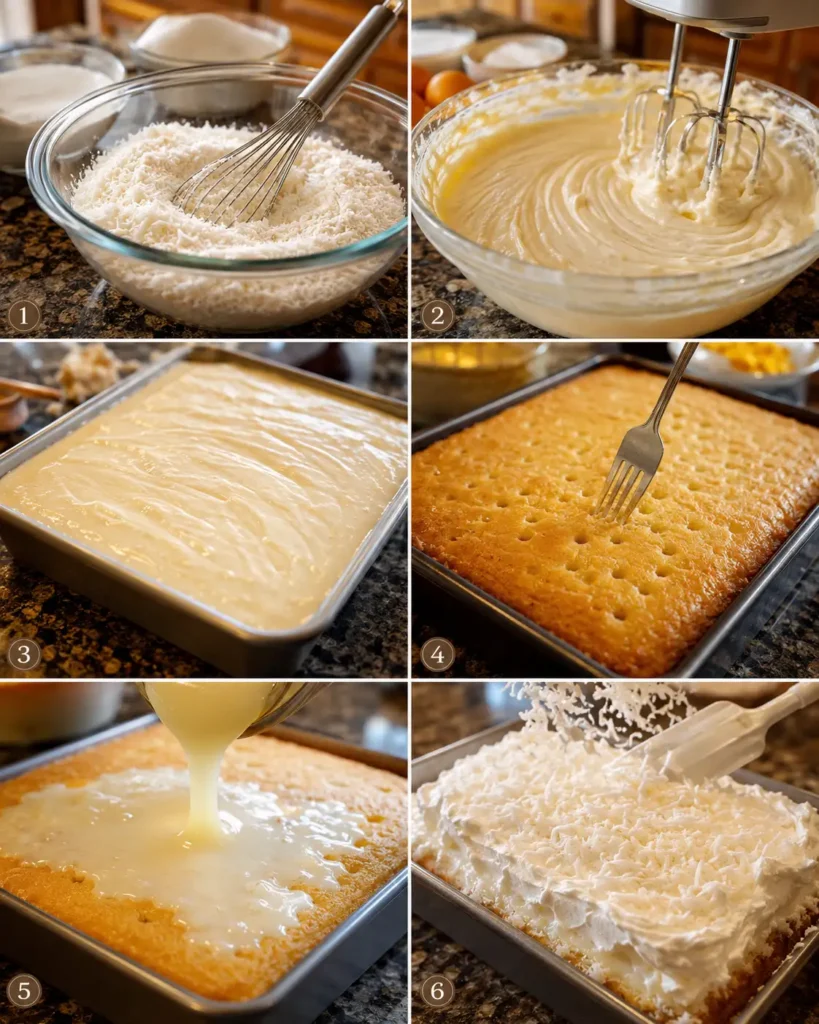
In a bowl, whisk together the flour, baking powder, baking soda, and salt. Set aside. This takes sixty seconds and matters — evenly distributed leavening bakes evenly.
Step 3 — Cream the butter and sugar.
Beat the softened butter and granulated sugar together on medium-high speed for a full three minutes. The mixture should turn pale and noticeably lighter in volume — you are building the air structure of the cake here. Set a timer. The three minutes are worth their full length.
Step 4 — Add eggs and extracts.
Add the eggs one at a time, beating well between each addition and scraping down the sides of the bowl. Add the vanilla and coconut extracts. The batter should be smooth and smell extraordinarily good at this stage.
Step 5 — Combine.
With the mixer on low, add the dry ingredients in three additions, alternating with the coconut milk and sour cream mixed together. Begin and end with the flour. Mix only until each addition just disappears — overmixing after the flour is in builds gluten and tightens the crumb. Fold in the shredded coconut with a rubber spatula.
Step 6 — Bake.
Spread the batter evenly into the prepared dish and smooth the surface. Bake for 28 to 32 minutes. The cake is done when the centre springs back lightly to the touch and a toothpick comes out with a few soft, moist crumbs. Not clean — moist crumbs. A perfectly clean toothpick means the cake has gone slightly past where you want it for the soak.
Step 7 — Poke. Immediately.
The moment the cake comes out of the oven — before it has cooled even slightly — poke holes all over the surface using the handle of a wooden spoon or a thick skewer. Space them about an inch apart, press all the way to the bottom. The holes are the invitation. Make them generous. Make them plentiful. The soak will find every one.
Step 8 — Make the soak and pour it in.
Whisk together the condensed milk, coconut milk, heavy cream, and coconut extract until smooth. Pour the mixture slowly over the warm, freshly poked cake — start at the edges, work inward, pour in two or three passes to give the liquid time to begin absorbing before you add more. The soak may pool slightly on the surface. Leave it. It will be gone by morning.
Step 9 — Cool, then refrigerate.
Let the cake cool completely at room temperature — at least an hour. Do not rush it to the refrigerator before it is cool; condensation forms and the soak distributes unevenly. Once cool, cover loosely and refrigerate. The minimum is two hours. The ideal is overnight. Nora always makes this the evening before.
Step 10 — Make the whipped coconut cream.
Beat the cold heavy cream with the sifted powdered sugar, vanilla, and coconut extract in a chilled bowl until thick, fluffy peaks form. Do not overwhip. The cream should hold its shape gracefully, not rigidly.
Step 11 — Top generously.
Spread the whipped coconut cream over the chilled cake — generously, not sparingly. Cover the entire surface with shredded coconut, pressing gently so it adheres. Add extra around the edges. The coconut should cover everything. This is a snowy cake, and the snowfall should be complete.
Step 12 — One more chill, then serve.
Refrigerate for a final 30 minutes before slicing. Slice cold, wipe the knife between cuts, and serve each piece with an extra spoonful of whipped cream. This is the moment the cake has been building toward since the first pour of soak the night before.
Nora’s Kitchen Notes
On the coconut milk:
Full-fat. Canned. Always. The coconut milk beverage sold in cartons — the kind shelved alongside oat milk and almond milk — is diluted to a fraction of the fat and flavour of the real thing. The richness of canned full-fat coconut milk is what makes both the batter and the soak what they are. Shake the can before opening. It separates in the can and needs to be recombined.
On the poke:
This is the most important instruction in the recipe. Poke while the cake is hot from the oven — not warm, hot. Pour the soak immediately. A cold cake resists the liquid. A warm cake welcomes it. Every minute between oven and soak is a minute of absorption capacity lost.
On waiting overnight:
The two-hour version is good. The overnight version is the version people talk about. The soak travels further into the crumb in twelve hours than in two. The cake becomes more uniformly moist, more deeply coconut-flavoured, more coherent as a single, unified thing rather than a cake with liquid on top. If you have the time — and you can make it the evening before, so you always have the time — use the overnight chill. It makes a different cake.
On toasted coconut:
The recipe suggests it, and it is worth following. Toast half the shredded coconut for the topping in a dry skillet over medium heat, stirring constantly, until golden and fragrant — about 4 minutes. Cool completely, then mix with the untoasted coconut before scattering over the cream. The toasted coconut adds a nuttiness, a slight caramel note, a visual warmth that makes the surface look less uniformly white and more layered and alive. It is a small addition that changes the character of the cake in a meaningful way.
On the season:
This cake is summer, but it is also December. It is the kind of coconut flavour that is warm and comforting in cold weather and bright and tropical in warm weather. Nora has made it in January for a birthday and in August for a porch dinner and both times the response was the same. It is not a seasonal recipe. It is a recipe that makes every season feel like the right season for coconut.
Ways to Change It
If you have mangoes: make the Mango Coconut Cream Cake from this collection and spoon a layer of the cooked mango filling across the top of the chilled soaked cake before adding the whipped cream. The mango-coconut pairing is one of the most beautiful combinations in warm-weather baking and the two recipes together on the same table produce a dessert spread that looks genuinely extraordinary.
If you have limes: add the zest of two limes to the batter and two tablespoons of fresh lime juice to the soak. Replace the vanilla in the whipped cream with lime zest. The lime cuts through the sweetness and adds a sharpness that makes the whole cake taste more vivid — a particularly good direction for a summer gathering where the air is warm and something bright and citrus-forward is welcome.
If you have patience for toasting: toast all the coconut — both the cup in the batter and the two cups in the topping. The batter’s toasted coconut adds a nuttier, more caramelised flavour throughout the crumb. The topping becomes golden rather than white. The whole cake looks and tastes more autumnal, more complex, more suited to a table in October than in July. Both versions are correct. Choose based on the season you are cooking for.
If you have rum: add two tablespoons of dark rum to the coconut cream soak. The rum’s warmth and depth sit beautifully alongside the coconut’s sweetness — it is a classic pairing in Caribbean baking, and it makes the finished cake taste like something served somewhere wonderful. Use the darkest rum available.
Storage
Covered in the refrigerator for up to 4 days. The cake does not improve past Day 2 — the crumb layers are at their best texture between Day 1 and Day 2 — but it remains excellent throughout the window. Keep it covered; the whipped cream topping will dry and absorb refrigerator odours if left uncovered.
Do not freeze the assembled cake. The whipped cream topping does not freeze gracefully. The untopped, unsoaked cake can be baked, cooled, wrapped tightly, and frozen for up to a month — soak and top after thawing.
A Recipe for a Moment
Nora Beckett has always cooked by the calendar — by what is ripe, what is arriving, what the season is quietly asking for. And this cake, she would be the first to tell you, does not belong to one particular square on the calendar. It belongs to the mood. To the gathering. To the afternoon that needed something beautiful and generous and genuinely, deeply coconut.
She has made it for June birthdays and December celebrations. For porch dinners in August when the heat lingered past eight o’clock. For quiet Sunday tables in November when something tropical felt like exactly the right contrast to the grey outside. It is the kind of recipe that adapts to the moment you are cooking it for — which is, she would say, the highest compliment a recipe can receive.
The kitchen will smell of vanilla and coconut for the rest of the day after you make this. The cake will sit in the refrigerator overnight, doing its slow, patient work. By morning it will be ready — soaked, set, waiting for its cream and coconut blanket. The occasion will be ready for it.
“A recipe isn’t just instructions. It’s an invitation to live in the moment you’re cooking for.” — Nora Beckett
More recipes tied to moments, celebrations, and the quiet pleasure of cooking with what’s fresh and alive. Follow Nora Beckett and the Seasonal Joy collection on AstroRecipes — and never miss the recipe for the season you’re in.
Recipes I Think You’ll Love