

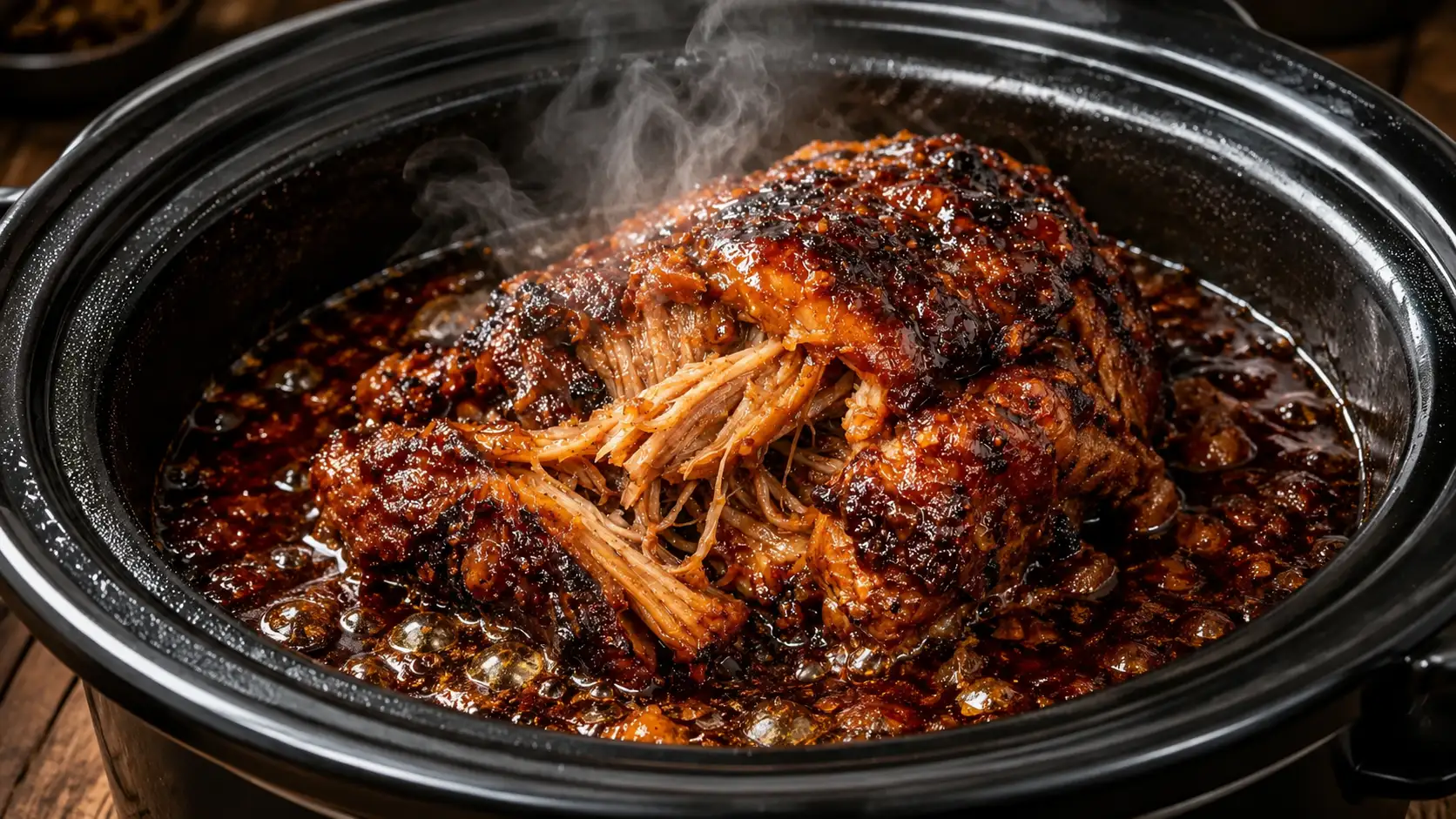
Claire Malin has cooked a lot of crowd-silencing dishes in her years writing for AstroRecipes’ Southern Bites — but few produce the kind of stunned, fork-frozen silence that this Pull-Apart Beef does the moment it lands on the table. That dark, glossy sauce. That impossibly tender beef that collapses at the touch of a fork. That slow-cooked smell that fills every corner of the house and makes people wander into the kitchen asking how long until dinner.
This is not a complicated dish. It is a patient one. You need a good cut of beef, a handful of pantry staples, a slow cooker or oven-safe pot, and enough willpower to leave it alone for several hours while it does exactly what it’s meant to do. The result is something so rich, so deeply savory, and so satisfying that the debate is almost inevitable: is this America’s ultimate comfort food — the kind of bowl-food Sunday supper that belongs on a Southern table with mashed potatoes and cornbread? Or is it England’s territory — a proper slow-braised roast that belongs alongside roasted parsnips and a glass of something dark and bold?
The honest answer is that it belongs to whoever is hungry. Let’s get into it.
Table of Contents
This Pull-Apart Beef Should Be Illegal 🔥🥩
Sticky, Tender, Slow-Cooked Comfort
Why This Pull-Apart Beef Hits Different
- The sauce. A deeply reduced, glossy braising liquid made with beef stock, Worcestershire, soy sauce, brown sugar, garlic, and tomato — sticky, savory, slightly sweet, utterly addictive.
- The texture. Low, slow heat breaks down collagen into gelatin, giving the beef that silky, pull-apart quality that no shortcut can replicate.
- The versatility. Pile it on mashed potatoes, stuff it into a bun, serve it over rice, roll it into tacos — it works for everything.
- The hands-off cook time. Once it’s in the pot, the oven or slow cooker does all the work.
- The leftovers. This beef is arguably better the next day. The sauce tightens, the flavors deepen, and the whole thing becomes even more irresistible.
Choosing the Right Cut of Beef
This recipe lives or dies by the cut. You need a tough, well-marbled cut that benefits from long, slow cooking — one that would be terrible as a quick-sear steak but becomes extraordinary after hours in liquid heat.
Chuck roast is the gold standard. It’s the classic American pot roast cut, packed with connective tissue that melts into luscious gelatin during braising. In the UK, this is often sold as ‘braising steak’ or ‘chuck steak.’ Look for a piece with visible fat running through it — that fat is flavor.
Brisket is a close second. Slightly leaner than chuck but with an incredible depth of flavor, especially from the flat end. It shreds into long, satisfying strands that look spectacular in the sauce.
Short ribs (bone-in) are the luxury option. More expensive, richer, and intensely beefy. The bone adds body to the braising liquid that no boneless cut can match.
Whatever you choose, do not trim the fat before cooking. You can skim the sauce afterward. The fat keeps the meat moist and carries the flavors of every herb and aromantic it cooks alongside.
Ingredients
Serves 6 | Prep: 20 min | Cook: 6–8 hours (slow cooker) or 3.5 hours (oven)
For the beef:
- 1.5–2 kg (3–4 lb) beef chuck roast or brisket, cut into 3 large chunks
- 2 teaspoons kosher salt
- 1 teaspoon freshly ground black pepper
- 1 teaspoon smoked paprika
- 2 tablespoons neutral oil (vegetable or avocado)
For the sauce & braise:
- 1 large onion, halved and sliced
- 6 cloves garlic, smashed and peeled
- 2 tablespoons tomato paste
- 250 ml (1 cup) beef stock (low sodium)
- 3 tablespoons Worcestershire sauce
- 2 tablespoons soy sauce (dark preferred)
- 2 tablespoons brown sugar (light or dark)
- 1 tablespoon balsamic vinegar
- 2 sprigs fresh rosemary or 1 teaspoon dried
- 2 sprigs fresh thyme or 1 teaspoon dried
- 1 bay leaf
To finish:
- 1 tablespoon cold butter (optional, for sauce gloss)
- Fresh flat-leaf parsley or chives, chopped
- Flaky salt to finish
Step-by-Step Instructions
Step 1 — Season and Sear
Pat the beef dry with paper towels — this is non-negotiable. Moisture is the enemy of a good sear. Season generously on all sides with salt, pepper, and smoked paprika. Heat the oil in a large heavy-bottomed pan (a Dutch oven or cast iron is ideal) over high heat until shimmering. Sear the beef in batches — do not crowd the pan — for 3 to 4 minutes per side until you have a deep, dark crust. You are building flavor here. This step is what separates a good braise from an exceptional one.
Step 2 — Build the Sauce
Remove the beef and reduce the heat to medium. Add the sliced onion to the same pan and cook, stirring occasionally, for 6 to 8 minutes until softened and beginning to caramelize. Add the garlic and cook for another minute. Add the tomato paste and stir it into the onions, cooking for 2 minutes until it darkens slightly and smells rich. Pour in the beef stock and scrape up all the browned bits from the bottom of the pan — that’s pure concentrated flavor. Add the Worcestershire, soy sauce, brown sugar, and balsamic vinegar. Stir to combine.
Step 3 — Braise Low and Slow
Slow cooker method: Transfer the sauce and onions to the slow cooker. Nestle the seared beef on top. Add the herbs and bay leaf. Cover and cook on LOW for 7 to 8 hours, or HIGH for 4 to 5 hours. The beef is done when it collapses easily when pressed.
Oven method: Return the seared beef to the Dutch oven with the sauce. Add herbs. Cover tightly with a lid or foil. Cook at 160°C / 325°F for 3 to 3.5 hours, checking once halfway through. The liquid should be gently bubbling, not violently boiling.
Step 4 — Pull the Beef
Remove the beef from the pot and set it on a board. Remove and discard the herbs and bay leaf. Use two forks to pull the beef apart into thick, generous chunks — not strings. You want texture, not mush. Resist the urge to shred it too fine.
Step 5 — Reduce and Gloss the Sauce
Pour the braising liquid into a saucepan and bring to a rapid boil over medium-high heat. Reduce for 8 to 12 minutes until the sauce coats the back of a spoon and turns thick and glossy. Taste for seasoning — adjust with salt, a touch more Worcestershire, or a squeeze of lemon if it needs brightness. Off the heat, swirl in the cold butter for a restaurant-level shine.
Step 6 — Bring It Together
Return the pulled beef to the sauce and toss gently to coat every piece in that sticky, glossy glaze. Serve immediately, scattered with fresh parsley and a pinch of flaky salt.
Pro Tips for Pull-Apart Perfection
Don’t skip the sear. It adds a Maillard-reaction crust that gives the sauce its depth and color. If you skip it, the final dish will taste flat by comparison.
Room temperature beef sears better. Take your beef out of the fridge 30 minutes before cooking. Cold meat releases steam in the pan and steams instead of searing.
Low and slow wins every time. The difference between 4 hours and 7 hours at low heat is enormous. If you rush it, the meat will be tender enough to slice but won’t have that true pull-apart quality. Give it time.
Sauce too thin? Keep reducing. The braising liquid contains enough natural collagen from the beef that it will thicken beautifully with heat alone — no cornstarch needed.
Season at the end. Braising concentrates flavors as liquid evaporates. Always taste the sauce after reducing before you add more salt.
Rest before pulling. Let the beef sit, loosely covered, for 10 minutes before pulling. It reabsorbs juices and pulls more cleanly.
America vs. England: Who Owns This Dish?
This is the question, isn’t it? Because this Pull-Apart Beef sits in a genuinely contested culinary space — one that both cultures have a legitimate claim on, and both would cook slightly differently.
The American version of this dish is firmly in pot roast territory. A Sunday slow cooker tradition, served over a mountain of creamy mashed potatoes with sweet glazed carrots on the side. It’s the kind of food that gets cooked while the family watches football, that fills the house with a smell so comforting it practically heals things. It’s nostalgic. It’s generous. It’s unapologetically sauced.
The English version is a Sunday roast braise — a braised brisket or rolled silverside that appears alongside roasted root vegetables, Yorkshire pudding, and a proper reduced gravy made from the pan drippings. It’s perhaps more restrained in sweetness, leaning harder on the Worcestershire and herbs, and served in elegant slices rather than pulled into strands.
The honest verdict? This recipe borrows the soul of both. The slow-cooker method is pure American patience and practicality. The sauce — Worcestershire, dark soy, balsamic, fresh rosemary — is rooted in British braising tradition. The glossy reduction is something both sides of the Atlantic would approve of entirely.
Make it on a Sunday. Put it in the slow cooker in the morning. Forget about dinner until the smell reminds you. Then decide for yourself which table it belongs on.
How to Serve It
- Over creamy mashed potatoes — the classic, the gold standard, the obvious and correct choice
- Stuffed into a crusty brioche bun with pickled red onion and a smear of horseradish cream
- On top of buttery polenta or grits for a Southern-Italian fusion that is genuinely special
- Alongside roasted root vegetables (parsnips, carrots, swede) for the full English Sunday experience
- Folded into tacos with quick pickled jalapeños, crema, and fresh lime
- Tossed through wide pappardelle pasta with the reduced sauce and a dusting of Parmesan
- Simply on its own, in a bowl, with good bread for sauce-mopping — this is underrated
Variations Worth Trying
Asian-Inspired Pull-Apart Beef: Swap the Worcestershire for hoisin sauce, add a tablespoon of sesame oil, two star anise, and a cinnamon stick to the braise. Finish with fresh ginger and scallions. Serve over jasmine rice or steamed bao buns.
Tex-Mex Shredded Beef: Add chipotle peppers in adobo sauce (2–3 peppers), cumin, and oregano. Use beef stock mixed with dark beer (stout or porter). Finish with lime and serve in tacos or burritos with guacamole.
Red Wine Braise: Replace half the beef stock with a full-bodied red wine (Cabernet or Merlot). This produces a more classic French-style braise with a deeply complex, wine-forward sauce. Pairs beautifully with egg noodles or crusty baguette.
Honey-Garlic Variation: Add 2 tablespoons of honey and 1 extra teaspoon of garlic powder. This leans sweeter and stickier — closer to a Korean-inspired braised beef that works brilliantly in rice bowls.
Storage & Make-Ahead
This dish was practically made for meal prep. The beef and sauce store together in an airtight container in the refrigerator for up to 4 days. The fat will solidify on the surface overnight — simply lift it off before reheating if you want a leaner sauce, or stir it back in for maximum richness.
To freeze: allow to cool completely, then freeze in portions for up to 3 months. Thaw overnight in the refrigerator and reheat gently in a covered saucepan over low heat with a splash of stock to loosen.
Make-ahead tip: This beef is genuinely better on Day 2. The sauce penetrates the meat further as it sits, and the flavors round and deepen in a way that same-day cooking simply can’t achieve. If you have the time, cook it a day ahead.
A Final Word from the Southern Bites Kitchen
There is something almost meditative about this kind of cooking. The prep takes twenty minutes. The rest is simply trust — trust in the slow, quiet alchemy of time, heat, and a good braising liquid doing exactly what they’re meant to do.
Claire Malin’s philosophy for Southern Bites has always been this: the best food asks little of you in the moment, but gives you everything at the table. This Pull-Apart Beef is the fullest expression of that idea. A little effort. A lot of patience. And a result so good that someone, somewhere at your dinner table, will say it should be illegal.
They’re right.
Recipes I Think You’ll Love